

German Islam at a crossroads: the training of imams in Germany

A Model High School Under Attack: The Case of Lycée Averroès
June 22, 2024
The Case of the Mosque of Monfalcone: the Administrative Regional Court ruling
June 28, 2024The Islamkolleg Deutschland represents an important initiative to train imams in Germany instead of relying on figures sent from Turkey. This step aims to integrate Islam into German society, addressing challenges related to foreign political influence and promoting intercultural integration.

Hope for a German Islam
The image of Ender Cetin, one of the first graduates of the newly established school for imams in Germany, encapsulates the hope of a German Islam finally ready to take root. His confidence stems from the belief that training local religious leaders, instead of relying on figures sent from Turkey, represents a "turning point." An opportunity to shape a more integrated Islam in German society, capable of speaking the language and understanding the culture of the hosting country.
However, the road to an autonomous German Islam is fraught with obstacles and controversies. For decades, Germany has benefited from an agreement with Turkey, which sent imams to preach in German mosques, meeting the need for spiritual guidance for a growing Muslim community. But with the rise to power of Recep Tayyip Erdoğan and his government's authoritarian drift, this agreement began to crumble.
Concerns have focused on the political influence exerted by Ankara on Muslim communities in Germany. Some imams, sent directly by the Turkish government, have been accused of promoting a pro-Erdoğan agenda, turning mosques into ideological strongholds and sowing division among the faithful. The accusations range from preaching a politicized Islam to the not-so-subtle support for Turkish military operations, to the surveillance of dissidents and opponents of Erdoğan who have sought refuge in Germany.
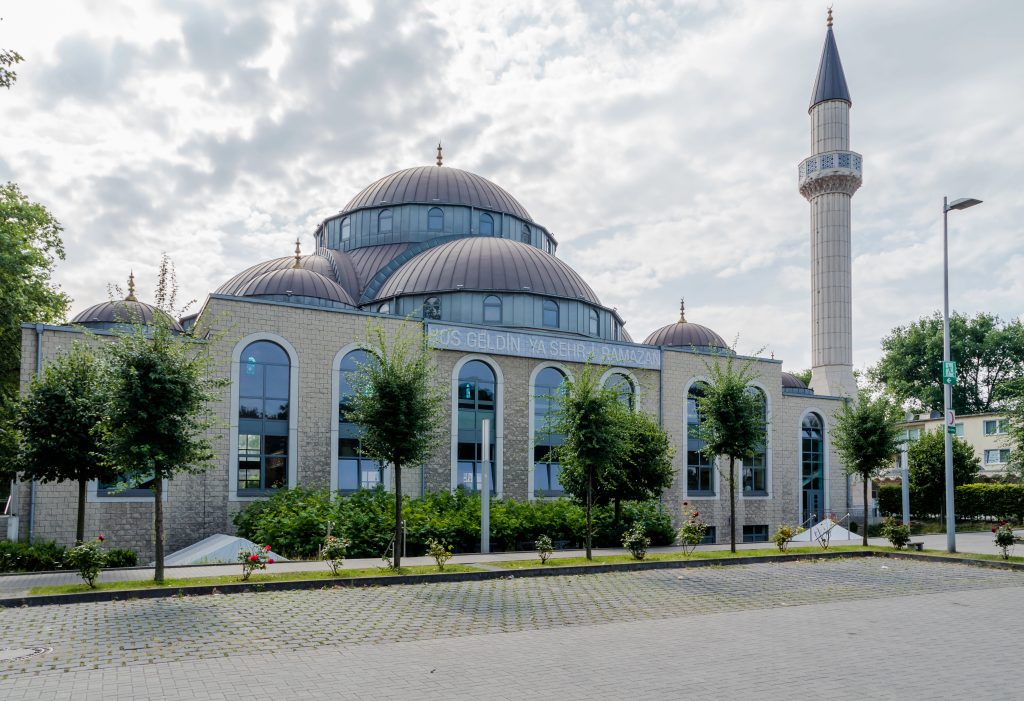
Faced with this situation, the German government has decided to intervene by promoting the training of imams on site. The goal is twofold: on the one hand, to curb foreign political influence on Muslim communities, in line with the decisions of the French government; on the other hand, to promote integration and intercultural dialogue, training religious leaders who understand the language, culture, and values of German society.
The Islamkolleg Deutschland, inaugurated in 2019 at the University of Osnabrück, represents the first concrete step in this direction. The institute, supported by the German Ministry of the Interior but independent of political and religious influences, aims to train imams capable of reconciling the Islamic faith with democratic principles and Germany's multicultural reality.
Controversies and challenges
However, the initiative has not failed to raise doubts and resistance. Some experts, such as Ahmet Erdi Öztürk from the London Metropolitan University, question the effectiveness of the project, emphasizing how many Turkish Muslims in Germany, especially first-generation ones, continue to prefer imams from their homeland, with whom they share language, culture, and a strong identity bond.
Even within the German Muslim community, opinions are far from unanimous. On one hand, figures like Ender Cetin, the young imam who trained in Germany, see local education as a historic opportunity to build an authentic and integrated German Islam, while on the other hand, critical voices are not lacking.
Saftar Çinar, spokesperson of the Turkish Confederation of Berlin-Brandenburg, while acknowledging the existence of isolated cases of overly politicized imams, defends the role played by Turkey in supporting the religious life of German Muslims. His words reflect the fear that training in Germany could distort the religious and cultural identity of a community used to looking to Turkey as a spiritual reference point.
The issue of training imams in Germany is part of a wider debate on the integration of Islam in Europe. On the one hand, there is a need to counter religious extremism and the influence of foreign actors, while on the other hand, it is essential to ensure religious freedom and the right of Muslim communities to preserve their cultural identity.
Germany's challenge is to find a balance between these contrasting needs, creating a model of European Islam capable of reconciling fidelity to its religious principles with adherence to democratic values and full participation in the social and cultural life of the host country. A long and complex path, whose success will depend on the ability to build an open and constructive dialogue between institutions, religious communities, and individuals.
Abdellah M. Cozzolino