

The Farewell Sermon

From Complaint to Du'ā: Turning Pain into Inner Trasformation
February 9, 2026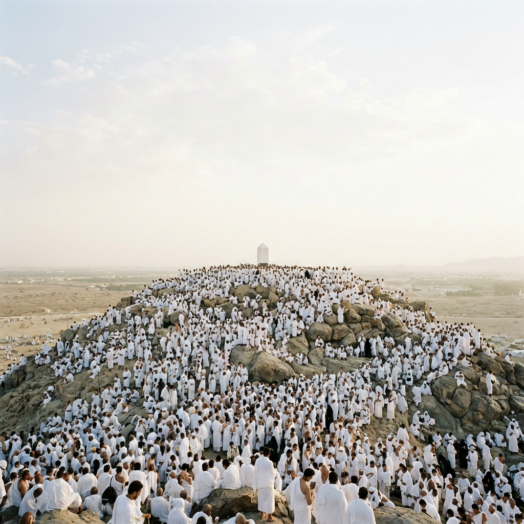
Khuṭbat ul-Wadāʿʿ [خطبة الوداع] is the sermon that was delivered by the Prophet Muhammad ﷺ in the month of Dhu al-Ḥijjah during the farewell pilgrimage. The Farewell Pilgrimage [حِجَّة ٱلْوَدَاع] refers to the Hajj of the Prophet Muhammad ﷺ that he performed in the Islamic year 10 AH, his first and last pilgrimage after the conquest of Mecca. He died approximately three months after this pilgrimage.
The Farewell Pilgrimage was given this name because the Prophet ﷺ bid farewell to the people in it. On this occasion, Prophet Muhammad ﷺ performed Hajj al-Qiran [حج القران], a type of Hajj in which a pilgrim combines the Umrah [lesser pilgrimage] and the Hajj into one continous state of iḥrām.
The Prophet ﷺ seized the opportunity provided by this immense assembly to reaffirm fundamental principles of Islam. For many, these were not necessarily new concepts; however, the call and reaffirmation have a value that cannot be overlooked. In this sermon, he instructed his followers on the essential themes of their religion and urged them to convey the message even to those who were not present.
Context
The sermon [Khuṭbat ul-Wadāʿ], which was delivered on Friday, the Ninth of Dhul-Hijjah, in the Uranah valley of Mount Arafat to over 100,000 Muslims, focused on the sanctity of life and property [such as the sanctity of the Day of Arafat], the abolition of pre-Islamic customs and usury, the exhortation to treat women well, adherence to the Book of Allāh, and equality among people.
The content focused in particular on:
- the sanctity of life and property (compared to the sanctity of the Day of ʿArafah);
- the abolition of pre-Islamic practices and usury;
- the exhortation to treat women well;
- adherence to the Book of Allah;
- the equality among people.
This khutbah was a historical proclamation of the rights of the Muslim in the greatest assembly and a declaration of a Muslim’s dignity and honor before Allāh, prohibiting any form of harm towards them. Even abundant acts of worship and devotion do not benefit the person if they persist in harming others. This Khutbah is therefore considered a foundational charter of diritti umani nell’Islam, addressing social justice, equality, and religious ethics.
Scattered portions of it are recorded in Ṣaḥīḥ al-Bukhārī and they constitute a comprehensive legal document of Islam.
The Valley of ʿUranah and the 'station' of ʿArafāt
Uranah Valley [وادي عرنة], where the sermon took place, is a historically and spiritually significant dry valley located in the Mecca region, bordered by the Mount Arafat plain and near Jabal al-Raḥmah.
It is where the Prophet famously stated, "I stood here, and all of Arafat is a place of standing".
وَعَنْ جَابِرٍ قَالَ: قَالَ رَسُولُ اللَّهِ ﷺ: نَحَرْتُ هَاهُنَا، وَمِنًى كُلُّهَا مَنْحَرٌ، فَانْحَرُوا فِي رِحَالِكُمْ، وَوَقَفْتُ هَاهُنَا، وَعَرَفَةُ كُلُّهَا مَوْقِفٌ، وَوَقَفْتُ هَاهُنَا، وَجَمْعٌ كُلُّهَا مَوْقِفٌ. [Ṣaḥīḥ Muslim]
The above phrase is a direct narration from the Prophet Muhammad ﷺ during his Farewell Hajj, recorded in Ṣaḥīḥ Muslim. It emphasizes that the crucial Hajj ritual of standing [wuquf] on the plains of Arafat on the 9th. of Dhu al-Hijjah can be performed by his followers anywhere within the boundaries of Arafat, and not just on or near Mount Arafat [Jabal al-Rahmah].
Mode of preaching
The prophet ﷺ after praising and thanking Allāh addressed the people before the prayer, while mounted on his mount, standing in the stirrups as narrated by Abū Dāwūd, on the authority of al-ʿAdā’ ibn Khālid). [may Allah be pleased with him]
Although it lasted only a few minutes, this khutbah is considered more important than much longer speeches. This is not surprising, as it was delivered by someone endowed with concise, clear speech and regarded as one of the most eloquent speakers of the Arabic language.
Established principles: inviolability, usury, overcoming of jāhiliyyah, women's issues.
The Prophet ﷺ affirms in the Khutbah, the sanctity and freedom of Muslims, and that their blood and wealth are inviolable unless there is a justified cause. Otherwise, it is forbidden injustice. This is undoubtedly because it is linked to the sanctity of the sacred months and the sacred mosque.
The Prophet ﷺ, in his sermon warns against consuming usury [ribā] and nullifies the usury of Jāhiliyyah, which is based on deferring payment for an increased amount, whether small or excessive.
“O you who have attained to faith! Fear Allāh and give up all outstanding gains from usury, if you are [truly] believers, for if you do it not, then know that you are at war with Allāh and His Messenger”. But if you repent, then you shall be entitled to [the return of] your principal: you will do no wrong, and neither will you be wronged”.
يَٰٓأَيُّهَا ٱلَّذِينَ ءَامَنُواْ ٱتَّقُواْ ٱللَّهَ وَذَرُواْ مَا بَقِيَ مِنَ ٱلرِّبَوٰٓاْ إِن كُنتُم مُّؤۡمِنِينَ فَإِن لَّمۡ تَفۡعَلُواْ فَأۡذَنُواْ بِحَرۡبٖ مِّنَ ٱللَّهِ وَرَسُولِهِۦۖ وَإِن تُبۡتُمۡ فَلَكُمۡ رُءُوسُ أَمۡوَٰلِكُمۡ لَا تَظۡلِمُونَ وَلَا تُظۡلَمُونَ
[Al-Baqarah – 278-279]
The Prophet ﷺ also confirms in the Khutubah, the necessity of opposing what the people of Jahiliyyah [pre-Islamic times] were upon. The explanation for this is that the term “Jahiliyyah” clearly means that a matter is either in Islam or not in Islam at all.
Allāh the Almighty says:
“Then is it the judgement of [the time of] ignorance they desire?”
أَفَحُكۡمَ ٱلۡجَٰهِلِيَّةِ يَبۡغُونَ-المائدة
[Al-Maida:50]
The Prophet ﷺ explained a major Muslim issue that the people of pre-Islamic times did not succeed in dealing with, the issue of women. Their whims and desires tossed women left and right, to the extent that they buried them alive.
“And when one of them is informed of [the birth of] a female, his face becomes dark, and he suppresses grief. He hides himself from the people because of the ill of which he has been informed. Should he keep it in humiliation or bury it in the ground? Unquestionably, evil is what they decide”.
وَ إِذَا بُشِّرَ أَحَدُهُم بِٱلۡأُنثَىٰ ظَلَّ وَجۡهُهُۥ مُسۡوَدّٗا وَهُوَ كَظِيمٞ يَتَوَٰرَىٰ مِنَ ٱلۡقَوۡمِ مِن سُوٓءِ مَا بُشِّرَ بِهِۦٓۚ أَيُمۡسِكُهُۥ عَلَىٰ هُونٍ أَمۡ يَدُسُّهُۥ فِي ٱلتُّرَابِۗ أَلَا سَآءَ مَا يَحۡكُمُونَ
[An-Nahl – 58-59]
Excerpts from the text of the Farewell Sermon
The following in scattered portions, are certain parts of the text of the prophet’s farewell sermon [Khuṭbat ul-Wadāʿ]:
1. Introduction of the message
"O People! Lend me an attentive ear, for I know not whether after this year I shall ever be amongst you again in this place. Therefore, listen carefully to what I am saying and take these words to those who could not be present here today."
2. Sanctity of blood and property; restitution of deposits; abolition of usury.
“O people, your blood and wealth are forbidden to you until you meet your Lord, as sacred as the sanctity of this day of yours and this month of yours. And you will meet your Lord and He will ask you about your deeds, and I have delivered the message. So, whoever has a trust let him return it to the one who entrusted it to him. And every usury has been abolished, but you may keep the principal of your capital, you should not wrong, nor be wronged.
Understand my words, O people, for I have delivered the message”.
3. Prohibition of falling back into fratricidal violence; guidance: Book of Allah and Sunnah.
“Do not return after me as an unbeliever, striking one another's necks, for I have left among you that which if you hold to it you will never go astray after me: the Book of Allāh and the Sunnah of His Prophet. Have I not conveyed the message? O Allāh, bear witness.
4. Unity of the human origin and equality
"O people, your Lord is one and your father is one. You are all from Adam, and Adam was from dust. The most honorable of you in the sight of Allāh is the most righteous of you. An Arab has no superiority over a non-Arab except in piety. Have I not conveyed the message?”
5. Abolition of the practices of Jāhiliyyah (bloodshed and usury)
“Indeed, your blood and your wealth are inviolable upon you like the sanctity of this day of yours, in this month of yours, in this land of yours. Indeed, everything from the affairs of the Jahiliyyah [pre-Islamic era] are quashed under my feet [abolished], and the blood of the Jahiliyyah is abolished. The first blood I negate from our blood is the blood of Ibn Rabi’ah ibn Al-Harith ibn Abd Al-Muttalib”
“And the riba [usury] of the Jahiliyyah is abolished, therefore all interest obligation shall henceforth be waived. The first riba I invalidate is our riba, the riba of Al-Abbas ibn Abd Al-Muttalib”
6. Final question and invocation as a witness
“And you will be asked about me, so what will you say?” They said, “We bear witness that you have conveyed the messages of your Lord, and you have fulfilled your duty and counselled your Ummah, and you have conveyed what was upon you.”
7. Warning about the manipulation of the calendar and the sacred months
"O men! the unbelievers indulge in tampering with the calendar in order to make permissible that which Allāh forbade, and to prohibit what Allāh has made permissible. With Allāh the months are twelve in number. Four of them are holy, there are successive, and one occurs singly between the months of Jumāda and Shaʿbān."
8. Be cautious of Satan
"Beware of Satan, for the safety of your religion. He has lost all hope that he will be able to lead you astray in big things, so beware of following him in small things."
9. Mutual rights and duties of men and women
"O People, it is true that you have certain rights with regard to your women, but they also have rights over you. Remember that you have taken them as your wives only under Allāh 's trust and with His permission. Do treat your women well and be kind to them for they are your partners and committed helpers”.
10. Practical Pillars: worship, prayer, fasting, zakāh, hajj
"O People! listen to me in earnest, worship Allāh, say your five daily prayers, fast during month of Ramaḍān, and give your wealth in Zakāh. Perform Hajj if you can afford it."
"All mankind is from Adam and Eve, an Arab has no superiority over a non-Arab nor a non-Arab has any superiority over an Arab; also, a White has no superiority over a Black nor a Black has any superiority over a White except by piety and good action. Learn that every Muslim is a brother to every Muslim and that the Muslims constitute one brotherhood. Nothing shall be legitimate to a Muslim which belongs to a fellow Muslim unless it was given freely and willingly."
12. Non fare ingiustizia, ricordare il rendiconto finale
“Non fate dunque ingiustizia a voi stessi. Ricordate: un giorno incontrerete Allāh e risponderete delle vostre azioni. Badate a non deviare dalla via della rettitudine dopo che io me ne sarò andato.”
13. Transmission of the message
"All those who listen to me shall pass on my words to others and those to others again; and may the last ones understand my words better than those who listen to me directly."
Conclusion
"O Allāh, be my witness, that I have conveyed your message to Your people."
The revelation recited and the completion of the Quran.
As part of this sermon, the prophet recited to them a revelation from Allāh, which he had just received, and which completed the Quran, for it was the last passage to be revealed:
“This day the disbeliever's despair of prevailing against your religion, so fear them not, but fear Me [Allāh]! This day have I perfected for you, your religion and fulfilled My favor unto you, and it hath been My good pleasure to choose Islam for you as your religion”.
الْيَوْمَ يَئِسَ الَّذِينَ كَفَرُوا مِن دِينِكُمْ فَلَا تَخْشَوْهُمْ وَاخْشَوْنِ ۚ الْيَوْمَ أَكْمَلْتُ لَكُمْ دِينَكُمْ وَأَتْمَمْتُ عَلَيْكُم نِعْمَتِي وَرَضِيتُ لَكُمُ الْإِسْلَامَ دِينًا
[Al-Mā”idah: 3]
Editorial