

Interreligious Harmony in Indonesia

Attack on the US Consulate in Florence
February 3, 2024
Religious Freedom Summit and Global Peace
February 6, 2024This article explores interreligious harmony in Indonesia during the New Order period, highlighting the role of dialogue, tolerance, and pluralism in shaping interreligious relations. It also analyzes the evolution of interreligious dialogue and the influence of globalization on religions.
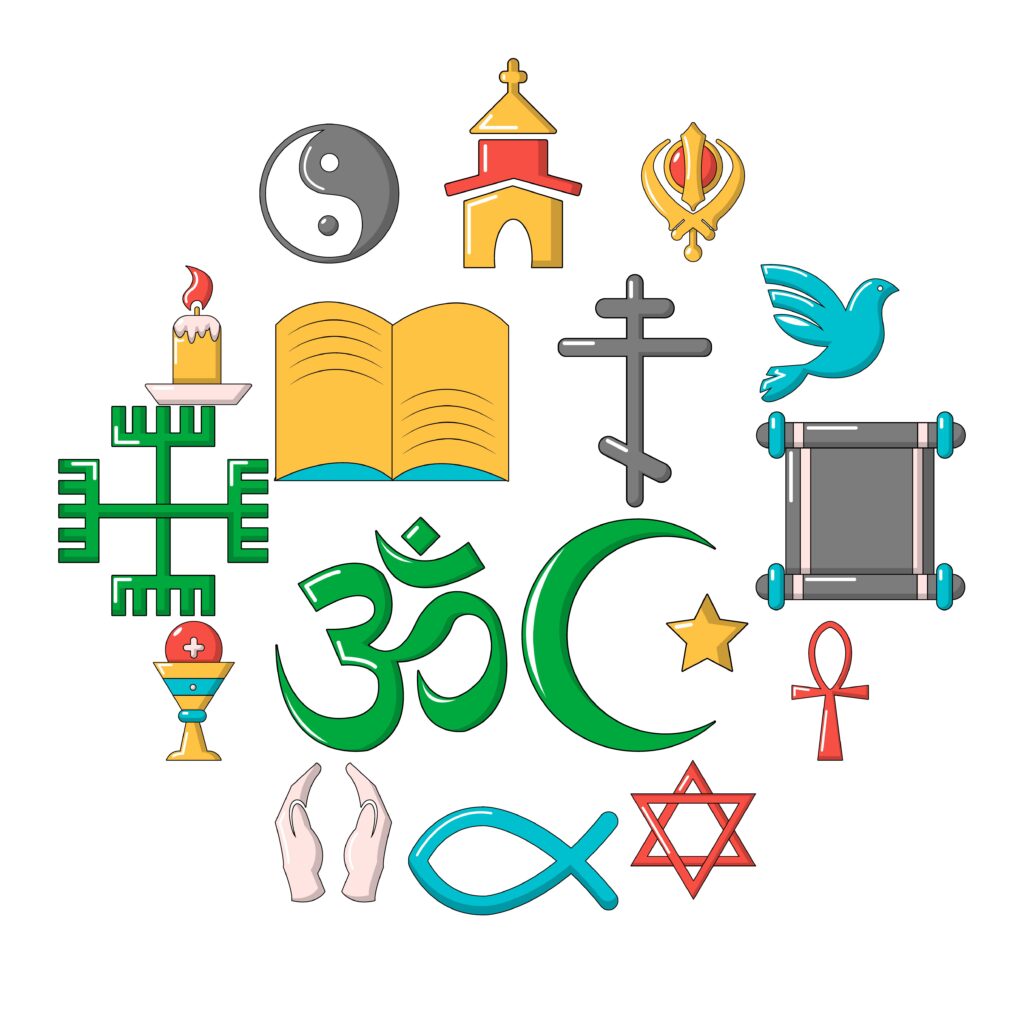
The initiative of interreligious harmony
There are many points of departure for dialogue and inter-religious cooperation. During new order, the terms dialogue and inter-religious cooperation were not popular. Efforts to improve relations between religions was done both by only a few religious figures and non governmental organizations.
The terms 'tolerance and peace among followers of many religions' was introduced by Muslim leaders at the time. In the context of tolerance, an important figure, Sheik Syarif Hidayat Muhammad Tasdiq a Sufi spiritual master of Isbathuliyah , is worth mentioning. As Sufi Master, he formed a project: 'Religious Communities Living Harmoniously', which organized dialogues between religious leaders. The Isbathuliyah foundation also formed a Consultative Forum for Religious Followers, which regularly conducted meetings. The Forum gathered and was formed by the Indonesian 'Ulama Council (Majlis Ulama Indonesia -MUI), Communion of Churches in Indonesia (Persekutuan Gereja-gereja di Indonesia -PGI), the All- Indonesia Conference of Churches (Konferensi Wali-wali Gereja se-Indonesia-KWI), Indonesian Hindu Community (Parisada Hindu Dharma Indonesia PHDI), and Indonesia's Buddha Representative (Perwalian Umat Buddha Indonesia Walubi).
We also recognize the terms pluralism and inclusion, voiced frequently by 'private' groups such as religious leaders and NGOs at that time.
The project to build a harmonious life and tolerance among followers of religion was conducted and initiated by the selected members of Isbathuliyah Sufi center under the supervision of Syarif Hidayat Muhammad Tasdiq..
The role of religions and the government
Meanwhile, as far as ideas of pluralism and inclusiveness are concerned, they are promoted by religious leaders for doctrinal reasons. The ideas are promoted to build a perception that religion (in this case Islam) indeed contains teachings which support ideas about pluralism. The fact that pluralism finally would support national integration was, for them, a secondary motivation or subsequent product (by-product). National leaders such as Abdurrahman Wahid and Prof. Dr. Said Agil Siraj the former Nahdhatul Ulama Chairman are noted as the most vocal proponents of Islamic pluralism. It can even be stated that the reputation of both leaders are built upon their ideas of pluralism.
It is interesting to note that interreligious harmony under the New Order was a government and NGO program. This indicates that the Government guided the religious community to live in tolerance, harmony and peace under the umbrella of national unity. Forms of harmony embodied in the program called a trilogy of harmony include:
- Internal Harmony between Religious Communities;
- Inter-religious Harmony
- Harmony between Religious Communities and the Government.
The evolution of interreligious dialogue
Although the Government and NGO initiated the above program, it is often stated formally that the essence of harmony is the responsibility of religions themselves to implement, not the Government. As a consequence, if there is internal conflict within religion and between religions, then it should be solved by followers of religion themselves.
The Government acted only as a mediator or arbiter." In other words, the Government is not the main factor determining harmony within the religious community. This contains the message that religions in Indonesia are not under the authority and influence of the Government.
The influence of globalization on religions
The relationship between religions and the State is one of consultation and partnership, and not domination. This is because Indonesia is not designed as a theocratic state.
Later, when the people took the program of inter-religious harmony into their own hands, some models to emerge from this social creativity were the result of integrated religions. However, the initial trend receiving the most attention is inter-religious dialogue in various forms. The meeting of religion and democratic ideas which became a lively topic of discussion from the outset of the 1990s, that is, after the fall of communism which was claimed a triumph for liberal democracy, made religious forums more open to other ideas. In the Indonesian context, for example, international academic seminars were organized around the themes of inter-civilization dialogues; religion and globalization; the West and Islam etc... These activities show that religions do not isolate themselves nor avoid the influences of globalization. The idea of [political] openness (glasnost) advanced by Soviet Union President, Michael Gorbachev, which later brought about the democratization of the entire Soviet Union and East Europe, was not a distinct phenomenon in the Communist states. It is a global phenomenon which also affects religion.
Yusuf Daud
Founder SophiaCitra Institute PhiloSufi centre for Interfaith and Intercultural dialogue Surabaya-Indonesia