

The Farewell Hajj [Ḥijjat al-Wadāʿ]

Sarah Amrani: "Terror of Beauty".
January 18, 2025
Salwan Momika: A tragic end
January 31, 2025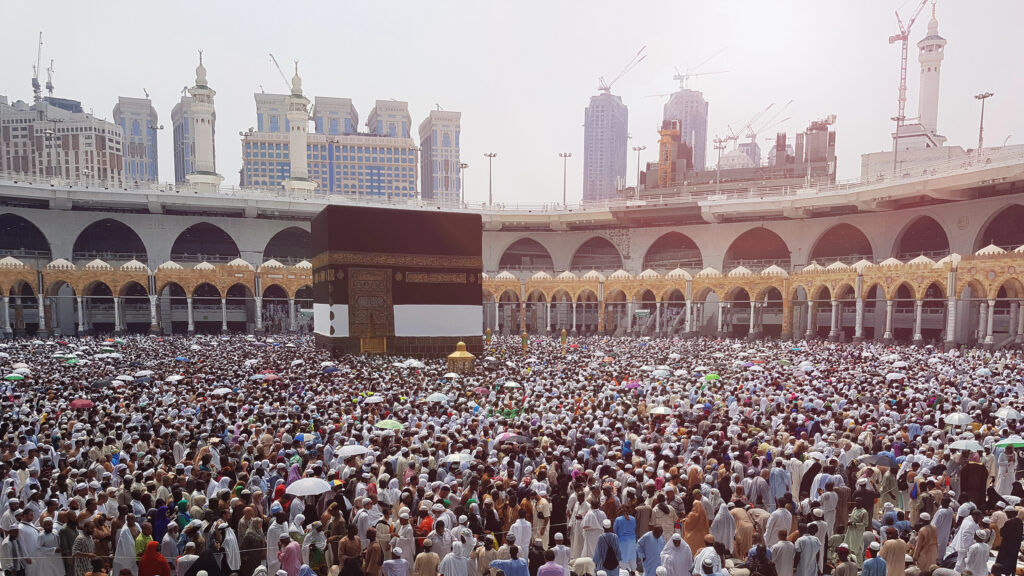
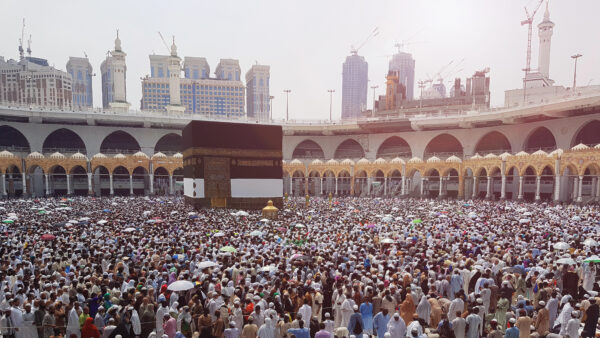
Mecca – Saudi Arabia, Hajj 2016
Hajj is a pilgrimage made to the "House of Allāh, “the Kaʿba” in the sacred city of Mecca in Saudi Arabia. It is one of the Five Pillars of Islam that each believer is called upon to perform, at least once in their life.
Allāh ﷻ says in the holy Qur'an:
“ “Pilgrimage to the House [Ka’aba] is due to Allāh from everyone of humankind who is [physically, financially and in many other ways] able and has the means to make the journey thereto. And whosoever disobeys let him remember that Allāh is Independent of the worlds” .”
وَلِلَّهِ عَلَى النَّاسِ حَجُّ الْبَيْتِ مَنِ اسْتَطَاعَ إِلَيْهِ سَبِيلاً وَمَنْ كَفَرَ فَإِنَّ اللَّهَ غَنِيٌّ عَنِ الْعَالَمِينَ
[Qur'an: āl ʿimrān: 97]
It is narrated on the authority of ʿAbd Allāh ibn ʿUmar that the Messenger of Allāh ﷺ said:
[The superstructure of] al-Islam is raised on five [pillars], testifying [the fact] that there is no god but Allāh, that Muhammad is His bondsman and messenger, and the establishment of prayer, payment of Zakāh, Pilgrimage to the House [Ka'ba] and the fast of Ramadan.
قَالَ عَبْدُ اللَّهِ قَالَ رَسُولُ اللَّهِ ﷺ “ بُنِيَ الإِسْلاَمُ عَلَى خَمْسٍ شَهَادَةِ أَنْ لاَ إِلَهَ إِلاَّ اللَّهُ وَأَنَّ مُحَمَّدًا عَبْدُهُ وَرَسُولُهُ وَإِقَامِ الصَّلاَةِ وَإِيتَاءِ الزَّكَاةِ وَحَجِّ الْبَيْتِ وَصَوْمِ رَمَضَانَ
[Ṣaḥīḥ Muslim]
The Prophet Muhammad's ﷺ Farewell Pilgrimage
The Farewell Pilgrimage - حِجَّة ٱلْوَدَاع Ḥijjat al-Wadāʿ refers to the one-Hajj-pilgrimage that the prophet Muhammad ﷺ performed with the Muslims in the Islamic year 10 AH. It was his first and last Hajj after the conquest of Mecca, and that’s why it was called the farewell pilgrimage.
Questo Hajj, già durante la vita del profeta, era conosciuto come il “Pellegrinaggio di Addio“ (hajjat al-wadaa) poiché il profeta ﷺ faceva spesso riferimento alla possibilità che quell’anno potesse essere il suo ultimo sulla terra, e si congedò dalla gente presente. Tuttavia, le persone continuavano a sperare che egli rimanesse tra di loro a lungo.
Il profeta morì circa tre mesi dopo il pellegrinaggio.
Importance of Hajj
The prophet, hence ﷺ performed Hajj al-Qirān [ حج القران], a type of Hajj in which ʿUmra and Hajj are performed together, with only one Niyyah and Iḥrām for both.
One of the things from this particular Haji, the Hajji of the prophet ﷺ, is that the majority of his followers who are referred to as Ṣaḥāba [companions] today, were called so because they met him ﷺ on this hajj. And this was the time more people became Ṣaḥāba than on any other event in Islam.
When you go to the books of hadith you find the chapter “bāb hajjat an-nabiyy” which is one of the longest chapters, and you will find in it one of the longest narrations about the Hajj. This long narration of Jābir ibn ʿAbd Allāh [may Allāh be pleased with him], goes point by point about everything that the prophet did for the hajj.
The Prophet's ﷺ Departure for Hajj
Jābir narra che il Profeta ﷺ rimase a Medina per un totale di nove anni, poi nel decimo anno annunciò la sua intenzione di compiere il Hajj.
Allah ﷻ dice nel Sacro Corano:
“And proclaim to the people the Hajj [pilgrimage]; they will come to you on foot and on every lean camel; they will come from every distant pass
وَأَذِّن فِي ٱلنَّاسِ بِٱلۡحَجِّ يَأۡتُوكَ رِجَالٗا وَعَلَىٰ كُلِّ ضَامِرٖ يَأۡتِينَ مِن كُلِّ فَجٍّ عَمِيقٖ
(Qur'an, Al-Hajj: 27)
This verse of the Qur’an brought about the intent into the prophet ﷺ to perform Hajj that year. When he announced this intent, people found out about that and started to gather around Medina so excited to embark on the journey with him. Up to about 144,000 people would do hajj with prophet ﷺ. All these people that the prophet had never met were there to perform hajj with him.
The prophet ﷺ before he leaves, he appoints his famous companion Abū Dujānā Simāk bin Kharāshā to be the governor of al-Madīna during his absence.
The prophet ﷺ on the 25th. of Dhu al-Qa'dah makes his way out of al-Madīna accompanied by his loves one. This was the fourth ʿUmra of the prophet ﷺ and all his ʿUmra were in Dhu al-Qa'dah. He prayed salāt dhūr in his own mosque, Masjid an-Nabawī, and then he goes out to the furthest Mīqāt, the furthest station, where people enter into iḥrām, and this is Mīqāt Dhu al-Ḥulayfah.
The Prophet ﷺ enters the state of Ihram
The prophet ﷺ gets to Dhu al-Ḥulayfah and he does his ghusl, he changes into his iḥrām and he says that a messenger came to me last night and told me to pray in this blessed valley - Wadi al-‘Aqiq.
ʿAbd Allāh ibn ʿUmar riporta:
Nel valle di al-‘Aqiq, ho sentito il Messaggero di Allah ﷺ dire:
“Stanotte un messaggero è venuto da parte del mio Signore e mi ha chiesto di pregare in questa valle benedetta e di assumere l’iḥrām per hajj e Umra insieme.” [Ṣaḥīḥ al-Bukhārī]
The prophet ﷺ prayed two rakaʿāt and then he dressed himself in two plain white garments of curtain from Yemen for iḥrām. The prophet’s iḥrām was indistinguishable from everybody else’s iḥrām. This was something significant, for he was wearing absolutely nothing that would set him apart from everyone else as the leader of the people. The prophet ﷺ mounts on a camel like everyone else, he carries his own luggage [on the Mount] like everyone else.
Narrated Thumāma bin ʿAbd Allāh, Anas said:
"Allah's Apostle performed Hajj on a packsaddle and the same Mount was carrying his baggage too." [Ṣaḥīḥ al-Bukhārī]
Narrated ʿAbd Allāh ibn ʿUmar:
I saw that Allāh’s Messenger ﷺ used to ride on his Mount at Dhu al-Ḥulayfah and used to start saying, “Labbaik” when the Mount stood upright.
عَن عَبْدَ اللَّهِ بْنَ عُمَرَ – رضى الله عنهما – قَالَ رَأَيْتُ رَسُولَ اللَّهِ ﷺ رَكِبَ رَاحِلَتَهُ بِذِي الْحُلَيْفَةِ ثُمَّ يُهِلُّ حَتَّى تَسْتَوِيَ بِهِ قَائِمَةً
[Ṣaḥīḥ al-Bukhārī]
The Revelations and the Farewell Sermon
Hence, the prophet ﷺ after praying in Wadi al-‘Aqiq, mounts on his favorite camel Al Qaswa [ٱلْقَصْوَاء] and makes his way for Hajj surrounded by people from all over the world. On his way, he began to chant out with monotheism, the slogan of monotheism which is the spirit and purpose of Hajj, and indeed the spirit and purpose of all acts of worship.
He recited:
““At Your service, O Allah, at Your service. At Your service: You have no partner, at Your service” Truly the praise, favor and sovereignty is Yours. You have no partner”.”
لَبَّيْكَ اللَّهُمَّ لَبَّيْكَ، لَبَّيْكَ لاَ شَرِيكَ لَكَ لَبَّيْكَ، إِنَّ الْحَمْدَ، وَالنِّعْمَةَ، لَكَ وَالْمُلْكَ، لاَ شَرِيكَ لَكَ
The companions of the prophet ﷺ went on doing whatever he did, the exact same thing, looking towards him throughout the entire journey. He was riding amongst them, [as Jaber describes], while the Qur’an was descending upon him. Those in the vicinity of the prophet ﷺ conveying what he is doing, to those who could not see him.
The Prophet ﷺ made the most of the opportunity presented by this great assembly to affirm what are considered major principles in Islam. They may not have been entirely new to those with him ﷺ, but reaffirmation and reminder have roles that cannot be ignored. The prophet ﷺ, as reported by imām Muslim, Abū Dāwūd, Ibn Mājah, Imām al-Bayhaqī, and others, delivered a famous khutbah referred to as the Farewell Sermon.