

Biotechnology and the Ethics of Creation in Islam: A Balance between Science and Divine Stewardship

The Quranic Miracle: How Fire Emerges from Green Trees
April 13, 2025
One God, Many Religions
May 10, 2025
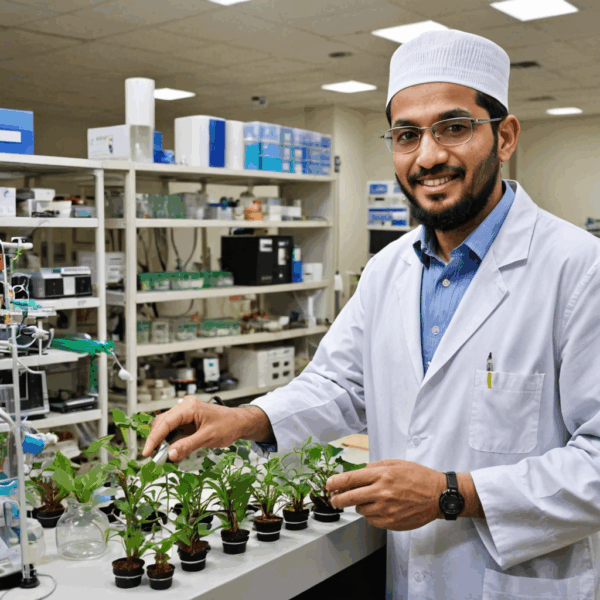
Muslim at work in a biotechnology laboratory.
Biotechnology grants humanity unprecedented power to modify life—from editing genes to synthesizing organisms. However, this power raises profound ethical questions in Islam, intersecting with core principles such as Tawhid (Oneness of God), Khalifah (stewardship of Earth), and the sanctity of life. The Quran and Sunnah provide clear guidance on humanity’s role as custodians, not creators, of life. This article explores the ethical challenges of biotechnology through an Islamic lens, emphasizing the balance between scientific progress and divine boundaries.
Genetic Engineering: Healing vs. Overstepping Divine Authority
Therapeutic Use: Permissible Innovation
Islam encourages the search for cures: the Prophet ﷺ said, "Allah did not create a disease without creating a cure for it" (Sahih al-Bukhari 5678). Technologies such as CRISPR, which is the genetic engineering approach that allows for the modification of the DNA of cells to treat genetic diseases, align with this principle.
Enhancement and Eugenics: Crossing Divine Limits
Non-therapeutic modifications, such as designing 'perfect' children, are in contrast with Qur'anic values: "He shapes you in the wombs as He wills" (Qur'an 3:6). The Prophet ﷺ warned against altering divine creation, a behavior that can be interpreted as an act of arrogance and a rejection of divine wisdom. The Prophet ﷺ said: "Allah curses those who alter His creation" (Sahih Muslim 2125).
Enhancements risk taghyir khalq Allah (altering Allah’s creation), a concept tied to arrogance and rejecting divine wisdom. The 2018 gene-edited babies scandal (He Jiankui) was condemned by Islamic scholars as unethical and akin to eugenics, which Islam rejects for violating human dignity and diversity.
Synthetic Biology: Creating Life and Islamic Ontology
Artificial Organisms: A Test of Tawhid
The Quran affirms Allah as the sole Creator:
- “He creates what you do not know” (Quran 16:8).
- “We have created every living being from water” (Qur'an 21:30).
Attempts to “create life” (e.g., the synthetic bacterium Synthia in 2010) risk shirk (associating partners with Allah) if framed as independent human creation. Scholars distinguish between:
- discovering Allah’s laws (permissible);
- competing with His role (forbidden).
Environmental Stewardship (Khalifah)
Islam mandates environmental preservation: “Do not corrupt the Earth after its reformation” (Quran 7:56). Releasing engineered organisms (e.g., malaria-resistant mosquitoes) requires rigorous risk assessment, aligning with the Islamic jurisprudential principle of maslaha (public interest) and harm prevention.
Complex issues require multidisciplinary consultations. The International Academy of Fiqh allowed research on stem cells from lawful sources in 2003, but prohibited embryonic destruction, stating: “Do not kill your children for fear of poverty” (Quran 17:31).
Divine Limits vs. Human Ambition
Transhumanist goals (for example, the radical extension of life) are in contrast to the principle of humility expressed in the Quran: “No soul knows what it will earn tomorrow” (Quran 31:34). Islam accepts mortality as part of the divine decree (qadar).
Lessons and Values: Connecting Science and Ethics in Islam
The discussion reveals that scientific progress must be linked to Islamic ethics.
- Balance between Science and Faith: Islam embraces scientific progress within ethical limits. The Quran states: “We have made you a balanced nation” (2:143).
- Noble Purpose of Science: Biotechnology should serve humanity without challenging divine wisdom. The Prophet ﷺ said: "Allah has not sent down a disease without also sending its cure" (Sahih al-Bukhari).
- Environmental Responsibility and Ethics: Innovations must protect ecosystems. It is written in the Quran: “Do not spread corruption on the earth” (7:56).
- Justice and Equity: Scientific monopolies are forbidden. The Prophet emphasized how resources should be shared: "People are partners in water, pasture, and fire" (Sunan Abi Dawud 3477).
- Maqasid al-Sharia: Scientific progress must align with the preservation of life and lineage.
- Shura in Decision-Making: Complex issues require consultation. “Consult with them” (Quran 3:159).
- Humility in the Face of Divine Power: Human knowledge is limited. “you have been given but a little knowledge” (Quran 17:85).
Biotechnology as Amanah (Divine Trust)
Islam does not reject science, but insists on ethical restraint. Biotechnology must serve humanity without usurping the sovereignty of Allah. As the Quran states: “Our Lord is He Who has given everything its form and then guided it” (Quran 20:50). Guided by taqwa (awareness of Allah) and compassion, Muslims can promote an ethical biotechnology that respects the sanctity of creation and reflects a balance between innovation and divine stewardship.
Jamel Gere Oromo