

Ahmed Ibrahim Munir Mustafa: long career in the service of the Muslim Brotherhood

World Day Against Female Genital Mutilation (GMF) 2023
February 6, 2023
Escape of jihadists from Aswad prison in Raju in Syria
February 10, 2023
The close relationship between Hamas and the Muslim Brotherhood.
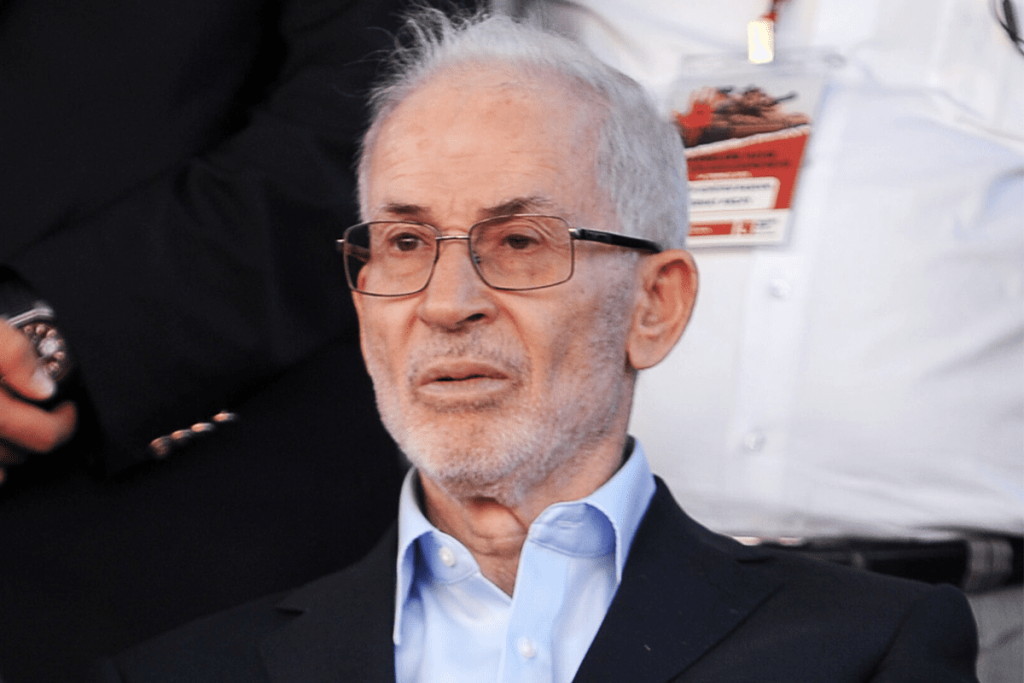
Ibrahim Munir è nato nel 1937 a Mansoura, in Egitto, e deceduto il 4 novembre 2022 nel Regno Unito. È entrato a far parte dei Fratelli Musulmani nel 1952 dopo essere stato profondamente influenzato dagli scritti del fondatore dell’organizzazione dei Fratelli Musulmani, Hassan Al-Banna. Durante l’era nasseriana fu incarcerato per 10 anni per la sua appartenenza e servizio ai Fratelli Musulmani.
After his release in 1975 he spent 5 years in Kuwait before being granted political asylum in Great Britain, where he lived until his death. He held numerous important positions within the Muslim Brotherhood Movement He was appointed secretary of the movement and spokesperson for the organization in Europe.
In the UK, Munir continued to support the Brotherhood's activities and sought to establish a front in the UK to represent the Brotherhood in Western countries. Munir's work intended to infiltrate the United Kingdom and other European states, to try to convince the Muslims there to adopt the ideology of the Movement, and to partake in its activities and its objectives.
In the eulogy he delivered for Munir, Khaled Mash’al, the leader of the Hamas movement abroad, stressed the close relationship between the MB and Hamas, the significant contribution of the MB to the establishment of Hamas and the support it extended to this movement over the years.
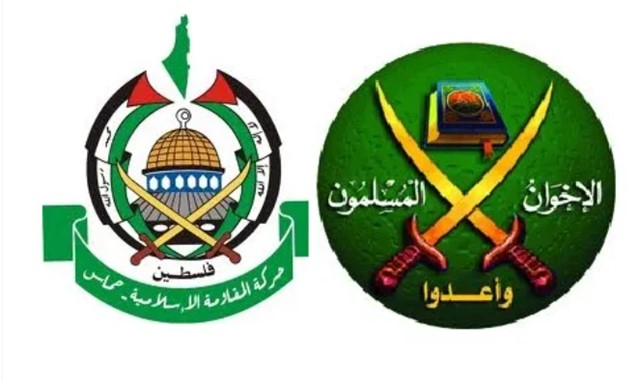
Mash'al noted, for example, that when the Al-Aqsa intifada broke out, the WMF leadership formed a Palestinian support apparatus, led by Ibrahim Munir, which assisted Hamas and all factions of the resistance. Palestinian, contributed to the planning of the intifada, and provided financial, political and media support to Hamas. That support continued even when Munir became the interim general leader of the MB.
Mash'al urged WMF and Hamas members to follow in Munir's footsteps to achieve important goals, mainly exalting Islam, the Islamic nation and the Palestinian cause.
Mash'al said:
This extraordinary figure – who poured out his goodness on his da'wa and [poured out his goodness on his brothers, his homeland and his nation – had enormous capacity when it came to Palestine, resistance, of the [Palestinian] cause and of Hamas.
“I remember four stages of his life- he further added- The first stage was in Kuwait, when he was the deputy of the former general guide of the Muslim Brotherhood, the late Mustafa Mashhur,, and Hamas was in its preliminary stages of consolidation and they sought leadership to give them sponsorship, to nurture them and remove the difficulties that stood in their way.
<<Mustafa Mashhur and the people around him, including his right-hand man Ibrahim Munir, provided what was needed. .
Oh, Muslim Brothers in Egypt and our brothers in Egypt, you can be proud that you… [played] a part in the creation of Hamas in its preliminary stages, and may Allah reward you for that…”.
“The second phase – he added – was when he moved to London and was the secretary of the MB abroad. He was concerned about the issue of Palestine and always put it at the top of his agenda".
“The third occasion was 20 years ago. When the Al-Aqsa Intifada broke out, the brothers in the leadership office of the MB started the creation of a support apparatus [for the Palestinians] and put Ibrahim Munir in charge of it, because they believed in his ability, in his decency , in his loyalty and in the important place Palestine had in his heart and conscience. The era of this support mechanism was one of the most glorious periods [in the history] of the MB, and Ibrahim Munir not only supported Hamas, but [all] factions of the [Palestinian] resistance and the cause of the entire Palestinian people">>.
“The fourth phase – finally – was when Ibrahim Munir became the deputy general guide [of the MB] and later the interim general guide, and had the first [and last] word [in the organization]. He devoted all his energy and authority to Palestine and Hamas. He has been by our side as we repulsed the occupation's aggression and fought campaigns in Gaza to break the siege [and stood by us] on the issue of Jerusalem and Al-Aqsa, in supporting the resistance and whenever we needed support and assistance”>>.
Editorial