

The Misinformation about Islam: A Threat to Social Cohesion

Quran: Eternal Miracle and Universal Guide
December 20, 2024
The Threat of ISIS: Between Metamorphosis and Persistent Challenges
January 4, 2025
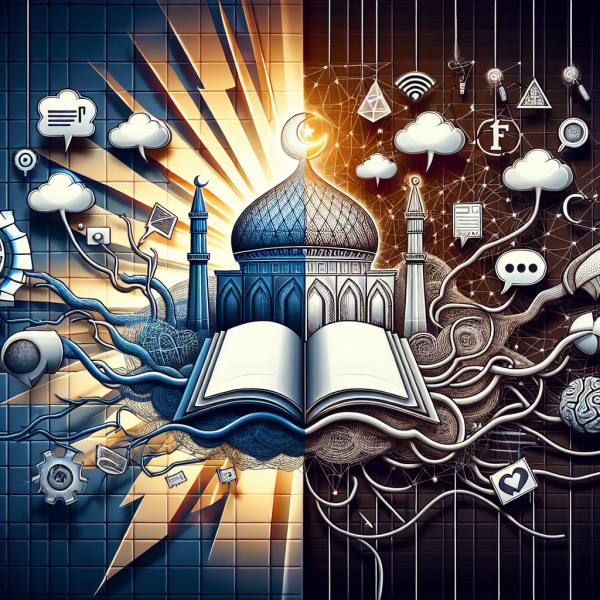
Misinformation about Islam generates stereotypes and fuels Islamophobia
Misinformation is a complex and pervasive phenomenon that has significant consequences for society. When it comes to Islam, misinformation takes on a particularly critical dimension, contributing to the reinforcement of stereotypes, fueling Islamophobia, and hindering interfaith dialogue. This phenomenon is especially relevant in the case of Islam, a religion often misunderstood and subjected to misleading narratives that foster prejudice and polarization.
Nature of misinformation about Islam
Disinformation about Islam manifests in many forms: from the spread of false news about Muslims to the manipulation of events to portray Islam as a threat. These messages, amplified by social media and some traditional media outlets, can have devastating effects. For instance, they can contribute to creating a climate of suspicion towards Muslim communities, fuel hate speech, and even "justify" acts of violence.
Among the most common examples of misinformation about Islam, we find:
- Fake news: Fabricated stories portraying Muslims as a threat to security or Western values.
- Manipulation of facts: Real events distorted to fit biased narratives.
- Visual propaganda: Images and videos that are decontextualized or altered to incite fear or hatred.
La mancanza di controllo sulle piattaforme digitali rende difficile arginare il fenomeno, mentre gli algoritmi tendono a privilegiare contenuti sensazionalistici, aumentando la diffusione della disinformazione.
La mancanza di controllo sulle piattaforme digitali rende difficile arginare il fenomeno, mentre gli algoritmi tendono a privilegiare contenuti sensazionalistici, aumentando così la diffusione di notizie false.
The prevalence of misinformation and its impact.
Although some critics downplay the extent of misinformation, labeling it as a marginal phenomenon, the data suggests otherwise. During the COVID-19 pandemic, false or misleading narratives about vaccines had a significant impact on public perception and individual behavior. Similarly, distorted narratives about Islam influence public opinions, reducing trust in Muslim communities and increasing social polarization.
Misinformation about Islam is not just a matter of perception but has tangible consequences on the social and political fabric.
- Increase in Islamophobia: Studies show that exposure to negative narratives about Islam contributes to increasing prejudice and hostility toward Muslims. This phenomenon is particularly evident in Europe, where Muslim communities are often perceived as “other” or incompatible with local values.
- Social Polarization: Misinformation fuels division between social groups, diminishing mutual trust and hindering dialogue. For instance, false news about alleged "no-go zones" governed by Sharia law has sparked tensions in many European cities.
- Impact on public policies: The distorted perception of Islam can influence political decisions, leading to discriminatory or ineffective measures. For instance, security policies based on stereotypes may alienate Muslim communities, reducing their cooperation with authorities.
Misinformation as a meta-risk
Misinformation about Islam does not operate in isolation but fits into a broader context of global challenges. As a *meta-risk*, misinformation influences the perception of other risks, such as terrorism or migration, amplifying their perceived impact. This phenomenon creates a vicious cycle: misinformation reduces trust in institutions, which in turn become less effective in combating misinformation.
An emblematic example is represented by the riots in the United Kingdom in 2024, triggered by a fake news story on social media accusing Muslims of violent acts. This event not only harmed the communities involved but also called into question the institutions' ability to manage crises.
Scientific Evidence on the Impact of Misinformation
Various studies have demonstrated the impact of misinformation on Islam:
- Propaganda and violence: Research on the genocide in Rwanda has shown how radio propaganda directly contributed to 10% of the violence, with even greater indirect effects. Similarly, misinformation about Islam can contribute to radicalizing individuals or groups.
- Psychological and behavioral effects: Various studies have shown that exposure to disinformative content reduces trust in institutions and increases polarization. In the case of Islam, this results in greater support for discriminatory policies and a decreased willingness to engage in dialogue.
- Dissemination on social media: A recent study revealed that disinformative content about Islam reaches a wider audience compared to accurate news, thanks to its sensationalistic nature.
Strategies to Counter Disinformation about Islam
Addressing misinformation requires an integrated approach involving various actors and tools:
- Media Education: Teaching young people to recognize and critically evaluate information is essential. Targeted educational programs can help dismantle stereotypes and prejudices.
- Regulation of digital platforms: Technology companies must take responsibility for monitoring and removing disinformative content. This includes the use of more transparent algorithms and the implementation of fact-checking systems.
- Promotion of interreligious dialogue: Initiatives that foster encounters and mutual understanding can reduce polarization and create an alternative narrative based on trust and respect.
- Support for research: Investing in scientific studies on disinformation and its effects can provide more effective tools to counter it. For instance, mathematical models can help predict the spread of disinformation and identify critical points for intervention.
Conclusion
Disinformation about Islam is an urgent challenge that requires a collective and multidisciplinary response. It is not only about protecting Muslim communities but also about safeguarding the fundamental principles of a democratic society: truth, justice, and social cohesion. Only through shared commitment can we hope to build a future where disinformation no longer has the power to divide and destroy.
Editorial