

Salwan Momika: A tragic end

The Farewell Hajj [Ḥijjat al-Wadāʿ]
January 27, 2025
Sustainability in Islam: Principles and Practices
February 21, 2025
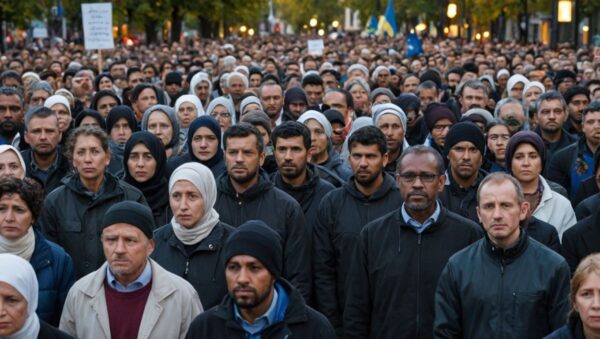
Sweden – Stockholm: Protests against Salwan Momika's act of burning the Quran (2017)
In the heart of Sweden, a dramatic event has brought renewed attention to an issue that deeply resonates with millions of Muslims worldwide: respect for what is sacred. Salwan Momika, a 38-year-old Iraqi refugee known for publicly burning copies of the Holy Quran in 2023, was fatally shot at his home in Södertälje. The murder, which occurred while Momika was live streaming on his social media profiles, has sparked intense debate over justice, freedom of expression, and the fine line between provocation and offense.
As a young human rights activist observed, "Those who committed this crime must be arrested and appropriately punished. If they are Muslims (as is most likely), they are a disgrace to Islam and a source of shame for all Muslims."
The context of the event
Momika became infamously known on June 28, 2023, when, in a deliberate act, he burned a copy of the Quran in front of Stockholm's main mosque. This gesture, carried out during an Islamic holiday, sparked indignation and protests in in many Muslim-majority countries, as well as diplomatic tensions between Sweden and the Islamic world. For Muslims, the Quran is not mere a book but the Word of God, a sacred text that guides the spiritual and moral lives of over a billion people. To desecrate it is akin to desecrating the very essence of the Islamic faith.
Momika's actions have not only deeply hurt the religious sentiments of many but have also fueled an atmosphere of hatred and division, jeopardizing peaceful coexistence in a society already marked by cultural and religious tensions. Despite this, Momika has persisted with similar acts, drawing legal proceedings and increasing social isolation upon themselves.
A murder that raises questions
The assassination of Momika, which occurred Wednesday late evening, led to the arrest of five individuals, while Swedish police are still investigating the circumstances of the crime. One of the hypotheses is the possibility that the killer entered the apartment through the roof. However, the case raises deeper questions: to what extent can freedom of expression go without violating the rights and feelings of others?
And what are the consequences of acts that, while claiming a supposed freedom, sow division and resentment?
This tragic episode reminds us that freedom of expression cannot be used as a pretext to fuel hatred and division, just as faith cannot be exploited to justify acts of violence.
The Islamic perspective
A lesson for the future
This episode should prompt the international community to reflect on the importance of mutual respect and peaceful coexistence. Freedom of expression is a fundamental right, but it cannot be used as a shield to justify hatred and provocation. Similarly, the response to provocation cannot be violence, but rather constructive dialogue that fosters mutual understanding.
The case of Salwan Momika serves as a warning for everyone: words and actions have consequences. It is the responsibility of every individual, regardless of their faith or ideology, to contribute to building a world where respect and dignity are at the heart of human relationships. This is only the way that tragedies like this can be avoided, and efforts can be made toward a future of peace and harmony among different cultures and religions.
Editorial