

The first cryptographer of the Arab-Muslim civilization

Islamophobic attack to the Swedish Muslim community
December 12, 2022
Massacre at Nice: the verdict of the Criminal Court of Paris
December 21, 2022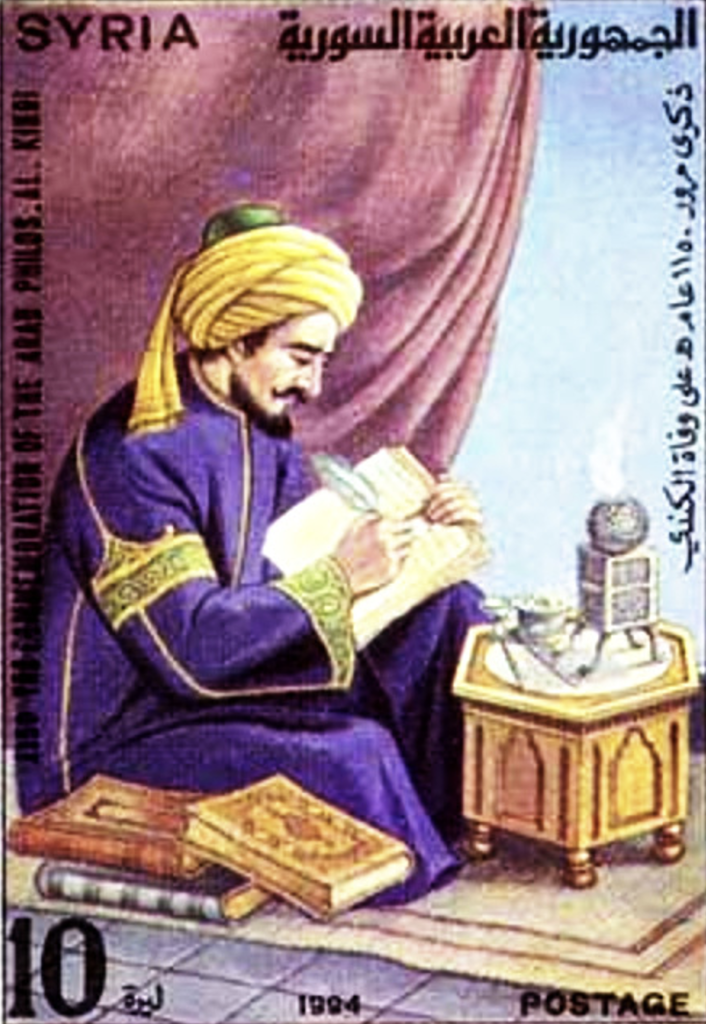
Since ancient origins, the secrecy of information has been an element of extreme importance and relevance, both tactical and strategic, capable of guaranteeing the success or defeat of a battle conducted both on the ground and in the digital space. Institutional administrations and the global community, in which users exchange personal information with the recipient user, have increasingly had to ensure the forwarding of the message and important information in a way that allows access and understanding only to the recipient.
Secrecy has led to the art of concealment, coding and coding. Simple message hiding or steganography can be an effective method by which a message can be delivered without being detected or intercepted by the adversary. Steganography is the science of physical concealing of messages, as opposed to cryptography, which conceals not the message itself, but its meaning. However, it depends on the elaborate way in which the message was hidden, together with the efficiency of enemy intelligence and their persistence in finding and investigating the courier or means of delivery. Encryption is a method or technique by which a message can be altered so that it becomes meaningless to anyone other than the recipient. The need for secrecy has led nations to create cipher secretariats and departments of encryption. With the establishment of the Abbasid Caliphate, in 750 AD. the golden age of Islamic civilization was inaugurated with the capital in Baghdad. The arts and sciences began to flourish. During this period, the Islamic world became an intellectual hub. The Abbasid caliphs were interested in maintaining the society that was in continuous evolution and progress and not in forcing themselves, with conquests of distant territories, to continue extending Muslim rule as was previously done by the Umayyad Caliphate.
To ensure efficient administration, communication security systems were created and this was implemented through cryptography, a science that has as its objective the concealment of the meaning of a message, so that the meaning can be recovered at the right moment. Sometimes the term is used more broadly, to designate any rational knowledge connected with secret writings; in this sense, it can be considered synonymous with cryptology. Muslim officials, to protect state information, encrypted, i.e. codified all fiscal documentation and secret scriptures were used. The picture is confirmed in administrative treatises, such as Abad al-Kuttab (The manual of the secretary) by Ibn Qutayba [3] (828-889), from the 10th century, a section of which is reserved for cryptography. Ibn Qutayba was also the author of Kitāb ʿuyūn al-akhbār (the sources of news), an encyclopedia full of anecdotes and historical, ethical and literary information in the typical style of Abad al-Kuttab.
This encyclopedia consists of 10 books, organized into: power, war, nobility, character, rhetoric, asceticism, friendship, prayers, nourishment and women. The invention of cryptanalysis, the science of interpreting a message whose key is unknown [4], should be attributed to the Arabs of the Middle Ages. During that time, while cryptographers developed new systems of secret writing, cryptanalysts try to identify their weaknesses and understand the secrets they keep. And it was the Arab cryptanalysts who found the weak point of monoalphabetic substitution, a system that had resisted every assault for centuries.
Numerous studies were carried out during the Abbasid period, in fact the most ancient cultures were assimilated, from Egyptian to Babylonian, from Indian to Chinese, from Persian to Armenian, from Hebrew to Greco-Roman, acquiring the opera of all kinds and translating them into Arabic. There is no doubt that Islam of that period was the most cultured and informed civilization of the world.
In Basra, Kufa and in Baghdad, the current Republic of Iraq, important theological schools had arisen where distinguished linguistic methods were applied both to the Koran, a compendium of divine truths of which Muhammad ﷺ was the spokesman, and Hadith, the canonical collection of acts and maxims of the Prophet. This structure was born with the prophet Muhammad ﷺ and then later the first caliph Abū Bakr رضي الله عنه had the task of bringing together all the revelations that make up the Quran made up of 114 suwar (chapters).
The drafting was carried out by the second caliph ʿUmar ibn al-Khaṭṭāb رضي الله عنه with the help of his daughter Ḥafṣa bint ʿUmar, and concluded with the third caliph 'Othmàn ibn 'Affàn رضي الله عنه For example, the calculation of the frequency of some words was used to establish the chronology of the chapters of the Quran: since some words were considered to be of more recent use, their abundance in a chapter justified its placement in the latter part of the chronology. Typical of the study of the Hadith was instead the effort to establish the etymology of the words and to identify recurring formulas, to demonstrate that a maxim attributed to the Prophet corresponded to his linguistic habits. Particularly important is the fact that the examination of the texts did not stop at the level of the words, but reached the individual letters. It was then realized that they appear with very variable frequency. Thus, A and 1 are the most common letters in the Arabic language, partly due to the definite article al-, while G is ten times less frequent. This apparently innocuous observation led to the first major discovery of cryptanalysis. It is not known who was the first to understand that the different frequency of the letters made it possible to decipher a cryptogram; certainly, the oldest description of the process is due to the ninth-century scholar al-Kindi.
Al-Kindī was born in Kufa (185 - 796) from an Arab aristocratic family of the tribe of Kindah, originally from Yemen. He was an Arab mathematician, astrologer, physician, philosopher, physicist, astronomer and scientist nicknamed "the philosopher of the Arabs". In Baghdad he enjoyed the protection of the Abbasid caliphs where he found himself translating Greek texts into Arabic. He was considered the pioneer of cryptanalysis, using different methods to decrypt an encrypted code. He is remembered as the first to study the statistics of the frequencies of the letters of a text. The longest monograph by him, found only in 1987, in the Ottoman Sulaimaniyyah Archive in Istanbul, is entitled Risāla fī istikhrāj al-muʿamma (Epistle on the deciphering of encrypted messages).
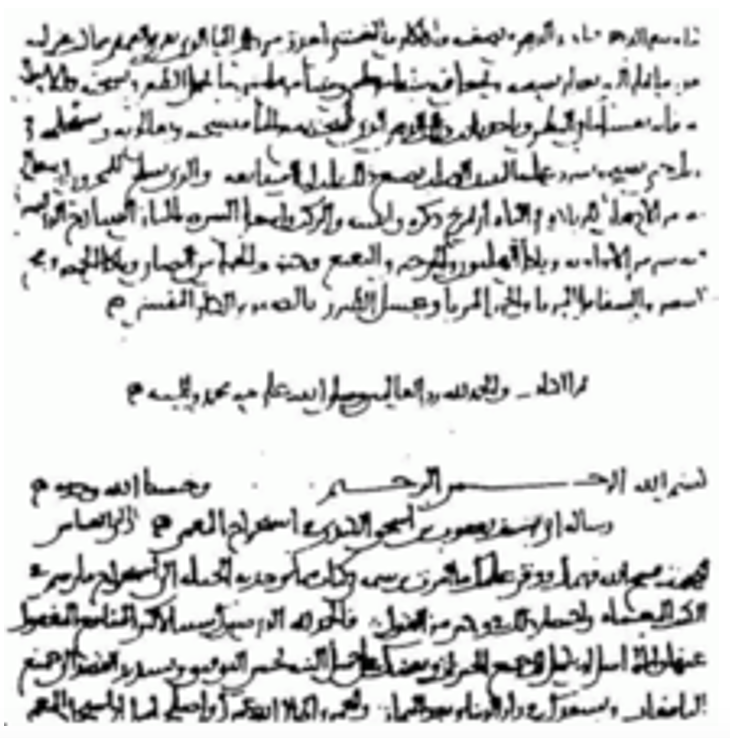
It contains extensive disquisitions about the statistics, phonetics and syntax of the Arabic language, but also the revolutionary cryptanalytic procedure listed below divided into two short paragraphs:
- • One way to crack an encrypted message, if we know the language of the original, is to find a different clear text in the same language long enough to calculate the frequency of each letter. Let's call the one that matches most often "first", the one that follows it by frequency "second", the next one "third", and so on, until all the letters in the clear text sample are used up.
- •We then examine the cipher text we want to interpret, also ordering its symbols (based on frequency). Let’s find the most common symbol, and replace it with the "first" letter of the clear example; the symbol that follows it in frequency is replaced by the "second" letter, the next most common symbol is replaced by the "third" letter, and so on, until having taken into consideration all the symbols of the cryptogram we intended to reveal.
The manuscript provides methods of cryptanalysis, ciphering, cryptanalysis of some ciphers, and statistical analysis of letters and letter combinations in the Arabic language. Al-Kindi's technique, known as frequency analysis, demonstrates that cryptanalysis does not involve checking several billion possible keys. The content of an encrypted message can be found out simply by calculating the frequency of the individual elements of the cipher text.
Dr Abdellah M. Cozzolino