

Quran: Eternal Miracle and Universal Guide

Latent Dangers of Religious Education
December 14, 2024
The Misinformation about Islam: A Threat to Social Cohesion
January 2, 2025
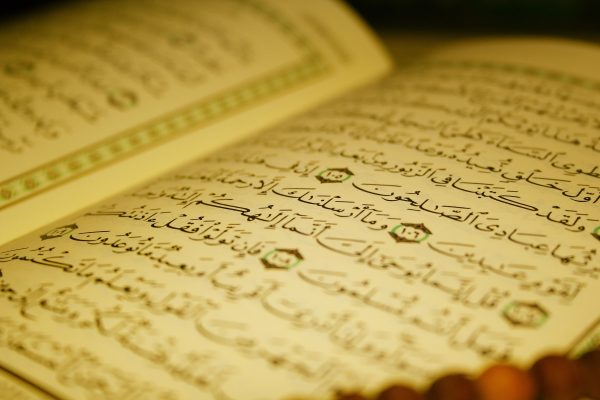
Quran: Eternal Miracle and Universal Guide on Depositphotos
The Quran, the Holy Book of Islam, is an eternal miracle and a universal guide for humanity. Through its linguistic beauty, its prophecies, and its coherence, it stands as tangible evidence of divine wisdom and a gift that transcends time and space.
In the name of God, the Most Compassionate, the Most Merciful. .
Praise be to Allah, the Lord of the Worlds.
May peace and blessings be upon our master, the Prophet Muhammad ﷺ, the Seal of the Prophets and guide of humanity.
There is no power nor strength except in Allah, the Most High, the Great.
Introduction
The Quran, the Holy Book of Islam, is much more than a religious text: it is an eternal guide, a living miracle, and a tangible proof of divine wisdom. Revealed to the Prophet Muhammad ﷺ over a span of 23 years, the Quran stands as a testament to the perfection and mercy of God, the Compassionate and the Merciful. For Muslims, it represents the unchangeable word of Allah, a gift that transcends the boundaries of time and space, continuing to enlighten the hearts and minds of those who read it with sincerity and devotion.
Its uniqueness is expressed in multiple aspects: linguistic beauty, the depth of its content, thematic coherence, and the ability to meet the spiritual, intellectual, and emotional needs of humanity. It is not a text confined to the past but a living message, capable of speaking to every generation with the same freshness and relevance as it did to the first believers.
God Himself, in the Quran, challenges humanity to produce something similar, a challenge that no one has ever been able to meet. This inability is not merely a matter of language but reflects the depth and multidimensionality of the Quranic text, which transcends human limits. It is not only a literary miracle but also a scientific, historical, philosophical, and spiritual one.
In this reflection, we will explore some of the most extraordinary aspects of the Quran, focusing on its miraculous nature and its lasting impact on humanity.
The Divine Challenge
One of the most extraordinary aspects of the Quran is the explicit challenge that Allah poses to humanity, a challenge that spans centuries and remains unresolved:
- "Say: 'If the men and the jinn were to gather together to produce the like of this Quran, they could not produce it, even if they were to assist one another.'" (17:88).
- "Or do they say: 'He has invented it himself.' Say: 'Then bring forth ten chapters like it, invented by you, and call upon whom you can besides Allah, if you are truthful.'" (11:13).
- "And if you have any doubt about what We have revealed to Our servant, then bring forth a chapter like it, and call upon your witnesses besides Allah, if you are truthful." (2:23).
These challenges are not limited to the literary form but also involve the content, internal coherence, and spiritual impact of the Quran. No text, ancient or modern, has ever equaled the Quran in its ability to simultaneously speak to the heart, mind, and soul.
The divine challenge is not merely an invitation to competition but a means to demonstrate the supernatural origin of the Quran. Its linguistic perfection, the depth of its meanings, and its ability to transform human lives are clear evidence that it could not be the work of a human being. Even the greatest poets and orators of the time, who excelled in the art of language, were unable to meet this challenge.
The challenge of the Quran, moreover, is not limited to its time. It continues to engage the hearts and minds of anyone who approaches this text with sincerity. Every verse, every word, every pause is an invitation to reflect on the greatness of Allah and the limitations of human abilities.
The Miracles of the Quran
The Quran presents miracles of various types, ranging from linguistics to scientific knowledge, from spirituality to logic. Every aspect of the Quran is a testament to its divine origin, and every miracle is a sign of Allah's mercy and wisdom.
1. Linguistic and Rhetorical Miracles
The Quran is written in such sublime and unique Arabic that it has set the standard for the Arabic language itself. Its structure does not follow the poetic or prosaic conventions of the time, yet it captivates the listener with incomparable beauty and depth.
Arab poets during the time of Prophet Muhammad ﷺ were masters of words, capable of composing verses that mesmerized crowds. Yet, when they heard the Qur'an, they were astonished by its uniqueness. The Qur'an was neither poetry nor prose but something entirely new, surpassing every known form of expression.
2. Knowledge of the Past and the Future
The Quran narrates historical events with precision, many of which were unknown during the time of Prophet Muhammad ﷺ. For instance, it recounts the story of Prophet Joseph (peace be upon him) with a depth and coherence not found in other sources.
Furthermore, the Quran contains prophecies that have come true throughout history. One example is the victory of the Byzantines over the Persians, predicted in verse 30:2-4:
“The Byzantines have been defeated, in a nearby land; but after their defeat, they will be victorious within a few years.”
3. Scientific Knowledge
Although the Quran is not a book of science, it contains references to natural phenomena that only modern science has been able to fully understand. For example, the description of embryonic development (23:12-14) or the references to the expansion of the universe (51:47).
4. Philosophical Miracles
One of the most profound aspects of the Quran is its ability to address universal philosophical themes such as existence, time, consciousness, and morality. Each topic is explored with a depth that surpasses human capabilities, providing answers that satisfy both the rational mind and the spiritual heart.
5. Organization and Coherence
Despite being revealed over a span of 23 years, under different circumstances and in response to specific situations, the Quran maintains a thematic and stylistic consistency that is impossible to replicate.
6. Spiritual and Psychological Impact
The Quran has a transformative effect on its readers and listeners. It touches hearts, inspires faith, and guides people towards a life of righteousness and inner peace.
The Quran is an eternal miracle that continues to guide, inspire, and challenge humanity. Its linguistic beauty, philosophical depth, and spiritual impact bear witness to its divine origin. For those who seek the truth with a pure heart and an open mind, the Quran offers comprehensive guidance and irrefutable proof of God's presence and wisdom.
As the Prophet Muhammad ﷺ said:
“His wonders never cease.”
May Allah guide us all on the right path and grant us the strength and wisdom to live according to the teachings of His Book.
May the Quran continue to be a light for hearts, a guide for minds, and a source of peace for souls. Praise be to Allah, the Lord of the Worlds.
Dr . Mohamed Alani