

Construction of Peace and Interfaith Dialogue

The Transformative Power of Ramadan: Faith and Health
March 9, 2025
The Last Ten Nights of Ramadan and Laylat al-Qadr
March 23, 2025

Interfaith Dialogue and Construction of Peace
Exploring the Islamic Perspective on Peace and Interreligious Dialogue: Sacred Texts and Prophetic Traditions. Through historical examples such as the Charter of Medina and contemporary initiatives like the Abu Dhabi and Marrakech Declarations, the article analyzes the challenges and opportunities offered by interreligious dialogue in the modern world. The commitment to justice, solidarity, and respect for diversity emerges as a concrete path towards harmonious and inclusive coexistence.
.
Introduction: Peace as a Foundational Value in Islam
In the Islamic perspective, the concept of peace (Salam) takes on a profound and multifaceted meaning that goes beyond the mere absence of conflict. Peace, indeed, represents an existential state of spiritual, social, and political harmony that is reflected in both individual and collective life. To fully understand the Islamic perspective on interfaith dialogue and peacebuilding, it is necessary to analyze its theological, historical, and legal roots, as well as the concrete implications that stem from it. This holistic vision of peace is deeply rooted in the sacred texts of Islam, particularly in the Quran and the Hadith.
The Quran provides clear guidance on resolving conflicts among believers, as illustrated in the following verse: “And if two groups of believers fight, make peace between them. But if one of them commits aggression against the other, fight the one that commits aggression until it returns to obedience to God's commands. And if it returns, then reconcile them with fairness and act justly. Indeed, God loves those who act justly” (Quran, 49:9).
–
The Theological and Quranic Foundations of Peace and Dialogue
The Quran and the prophetic tradition (Sunna) provide a solid theological foundation for genuine commitment to peacebuilding and promoting dialogue with other religions. The sacred text of Islam clearly exhorts believers to establish peaceful and respectful relations with other religious communities, particularly with those referred to as as the "People of the Book" (Christians and Jews). The Quran indeed invites Muslims to engage in dialogue "in the best manner" emphasizing the need to build relationships based on mutual respect, justice, and understanding.
“We believe in what has been revealed to us and in what has been revealed to you. Our God and your God is the same, and to Him we submit” (Quran, 29:46).
These theological principles represent the foundation for an Islamic vision of peace that is not merely theoretical but entails an active and responsible commitment from every believer within society.
–
The Historical Example of the Charter of Medina: A Model of Interreligious Coexistence
A fundamental reference for understanding the Islamic perspective on peacebuilding is the Constitution of Medina (622 CE). This historical document, drafted by Prophet Muhammad, represents one of the world's earliest examples of a written constitution, establishing peaceful coexistence among diverse religious communities by defining shared rights and obligations.
The Charter of Medina recognized not only the religious freedom and human dignity of all communities present in the city but also promoted collaboration, solidarity, and social justice as essential elements for achieving peace and stability. This historical example demonstrates how, from its origins, the Islamic tradition laid the foundations for interreligious coexistence based on universal and inclusive principles.
–
The Centrality of Justice in the Islamic Vision of Peace
From the Islamic perspective, authentic peace is inseparably tied to the concept of justice (*‘Adl*). The Quran repeatedly emphasizes the importance of social, economic, and political justice, considering it an essential condition for achieving peace. Without justice, lasting peace is unattainable, as injustices inevitably generate tensions and conflicts.
Therefore, the Islamic commitment to peace necessarily entails a concrete effort in combating inequalities, discrimination, and oppression, promoting inclusive and supportive policies that safeguard the fundamental rights of every individual, regardless of their religious or cultural affiliation.
–
Principles and Methodologies of Interreligious Dialogue in Islam
Interreligious dialogue, from the Islamic perspective, is not merely an exchange of viewpoints, but a deep and transformative process aimed at mutual understanding and concrete cooperation. It is based on some fundamental principles:
– Mutual respect (recognizing each other): Acknowledge and value differences without trying to impose one's own perspective on others.
– Seeking common ground: Focus on shared elements, such as human dignity, solidarity, and peace, to build bridges for dialogue and collaboration.
– A deep understanding of the other involves overcoming stereotypes and prejudices through intercultural and interreligious education.
These methodological principles make interreligious dialogue in Islam a dynamic and action-oriented process, capable of having a concrete impact on social reality. It is a complex process that requires:
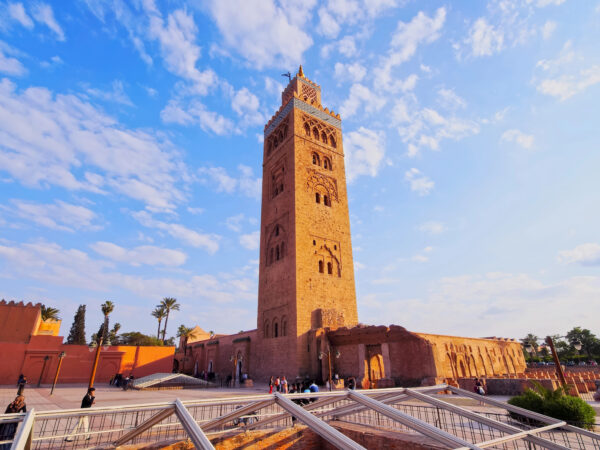
The Marrakech Declaration, drafted on January 27, 2016, by over 250 Muslim scholars and intellectuals under the auspices of King Mohammed VI of Morocco, stands as one of the most authoritative contemporary documents on the "rights of religious minorities in Islamic lands."
–
Contemporary Experiences of Dialogue: Abu Dhabi and Marrakech
Recent international experiences, such as the Declarations of Abu Dhabi (2019) and Marrakech (2016), represent significant examples of contemporary Islamic commitment to interreligious dialogue and peacebuilding.
The Abu Dhabi Declaration, signed by Pope Francis and the Grand Imam of Al-Azhar, represents a historic step towards human brotherhood and peaceful coexistence among different religions. It clearly states that no religion can justify violence and hatred, promoting education for peace and respect for diversity.
The Marrakesh Declaration, on the other hand, reaffirms the importance of protecting religious minorities in Muslim countries, explicitly referencing the principles of the Charter of Medina as a historical and legal framework to ensure religious freedom and equality of rights.
These examples concretely demonstrate how the Islamic perspective on interreligious dialogue can translate into real and meaningful initiatives.
–
Challenges and Opportunities of the Islamic Perspective in the Contemporary World
–
– Structural obstacles
–
– Cultural and Contextual Obstacles
–
Towards a Future of Peace and Dialogue
Editorial