

Rojava: ten thousand ISIS Foreign Fighters awaiting trial

Vienna Pride, a terrorist attack on yesterday's parade was foiled
June 19, 2023
Stockholm, one person arrested in protests after the first burning of the Koran
June 28, 2023
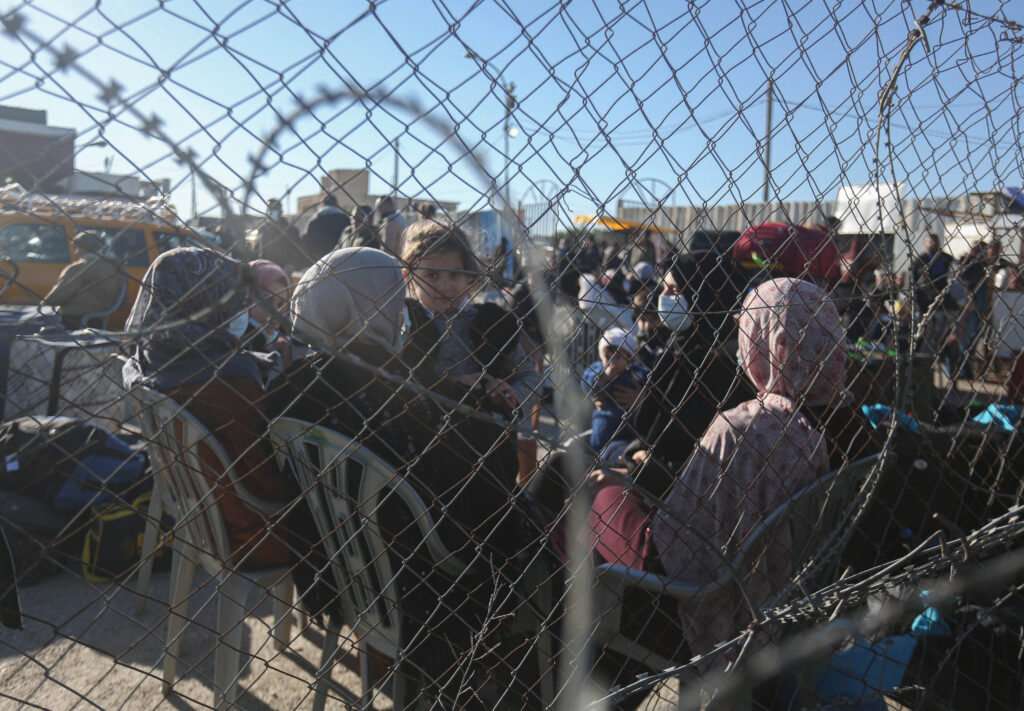
(INT) The Egyptian authorities open the Rafah crossing with Gaza. February 1, 2021, Rafa, Gaza, Palestine: Palestinians wear protective masks amid the spread of the Coronavirus (Covid 19), waiting next to their luggages to obtain travel permits to cross the Rafah border crossing in the southern Gaza Strip, after announcing that Egypt will reopen it from 1 to 4 February. Credit: Yousef Masoud/Thenews2.
Currently, in Rojava, a predominantly Kurdish region in northeastern Syria, ten thousand foreign fighters of ISIS are detained awaiting trial. Rojava authorities have requested that Western states take back their citizens and prosecute them in their home countries, but these requests are still pending. Additionally, there is discussion about the possibility of establishing an international tribunal or repatriating the foreign fighters of ISIS.
Four years have passed since the fall of the Islamic State, but over ten thousand ISIS foreign fighters detained in Rojava, a predominantly Kurdish region in northeastern Syria, are still awaiting trial.The independent Administration of North-East Syria (Aanes) is asking Western states to take back their citizens and try them once they are at home, but the requests from the Kurdish authorities are pending. A resolution process will certainly be implemented by Western countries regarding this delicate issue that is of Community interest.
The authorities have ensured that the trials will be open, fair and transparent in accordance with international and domestic laws on terrorism. The priority up to now remains the establishment of an international tribunal, as has already been requested several times.
Carrying on these processes, however, will not be easy. First of all, there is a problem of legitimacy: the Administration of Rojava governs north-eastern Syria, but it is not officially recognized internationally as a state entity, so the validity of the sentences issued can easily be questioned. There are also doubts about the possibility of guaranteeing the defendants' rights, starting with the right to receive legal assistance, on which the Administration has expressed itself in rather general terms. But what is also worrying, is the ability to guarantee the safety of the places where the trials will take place and to avoid external attacks and escape attempts by the defendants.
The best solution would therefore be the establishment of an international court or the repatriation of the Foreign Fighters. The only repatriations that have been witnessed are those of minors, but these are still small numbers. In their case, the State must have adequate de-radicalization and reintegration programs at its disposal, but not all European countries are sufficiently prepared.
The situation of women involved with ISIS is extremely complex. Some have been implicated against their will, constrained or kidnapped, and are hence in a desperate situation, especially after experiencing the oppressive reality of the Islamic State regime. However, some women have chosen to adhere to the values of ISIS, and continue with their loyalty.
Inside detention camps like Hol, where there are a large number of ISIS militiamen, rules of conduct and obedience are imposed in order to maintain order and security inside.
È importante ricordare che ogni individuo ha una storia unica e le motivazioni dietro le scelte dele donne coinvolte con l’ISIS possono variare notevolmente. La comprensione di queste sfumature è cruciale per affrontare efficacemente la complessità della situazione e cercare situazioni a lungo termine per il recupero delle persone coinvolte.
Editorial