

From Complaint to Du'ā: Turning Pain into Inner Trasformation

Du'ā al-Qunūt - The Qunūt Supplication
January 31, 2026
The Farewell Sermon
March 2, 2026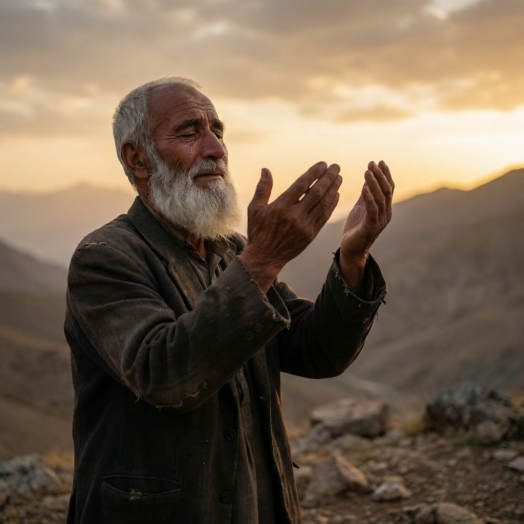
We live in an era where complaining becomes a widespread form of communication. It seeps into public discourse, social media, and personal relationships. Often, it seeks not solutions but validation; it generates not responsibility but instead fuels resentment. It is a sterile repetition that consumes inner energy and weakens bonds.
Yet Islam clearly distinguishes between destructive complaint and the lament that becomes supplication to Allah. This distinction is not merely moral or psychological. It is rooted in Qur’anic theology and Prophetic spirituality. It is decisive not only at the spiritual level, but also at the anthropological and social levels.
The difference between complaining and invoking
Sterile complaint (shakwā in a negative sense) is a closed discourse: it folds in on itself, seeks emotional validation, but does not open new horizons. It produces frustration, sometimes victimhood, and often alienates those who listen.
However, the Islamic tradition distinguishes between:
• shakwā ilā Llāh – turning one's complaint toward Allah
• shakwā min Allāh – directing one's complaint against Allah.
The first is permissible and even spiritually elevated; the second implies a challenge to the divine decree (qaḍāʾ) and is therefore theologically problematic.
Distinct from sterile complaint is the lament that becomes supplication (duʿāʾ, tadarruʿ). The Qur’an offers a luminous example in the words of the Prophet Yaʿqūb (عليه السلام)::
إِنَّمَا أَشْكُو بَثِّي وَحُزْنِي إِلَى اللَّهِ
«Innamā ashkū baththī wa ḥuznī ilā Llāh»
“I complain of my sorrow and my grief to Allah.” (Cor. 12:86).
Here, pain is neither denied nor repressed. It is directed. It does not turn into an accusation against the world, but into an opening toward the Most High. It is a vertical movement that prevents suffering from hardening into resentment.
In the same context, Yaʿqūb speaks of ṣabr jamīl (“beautiful patience”): a patience free of rebellion against God and free of any narcissistic display of pain. It is not emotional anesthesia; it is a discipline of the heart.
Invocation to Allah is therefore an act of truth: it acknowledges human fragility and, at the same time, divine transcendence. It is the awareness that the human heart is not self-sufficient.
The spiritual value of tears.
In contemporary times, the sense of authentic weeping has also been lost. People shout often, but they rarely weep. Islam, by contrast, attributes profound spiritual dignity to tears.
The Prophet ﷺ cried for the death of his son Ibrāhīm and said:
«The eye sheds tears, the heart is saddened, but we do not say anything except what pleases our Lord».
This teaching contains a complete pedagogy:
• pain is legitimate;
• emotion is not denied;
• the word remains disciplined by the consciousness of Allah.
In another ḥadīth (Ṣaḥīḥ al-Bukhārī and Muslim) it is mentioned, among those who will receive a special shade on the Day of Judgment, "a man who remembers Allah in solitude and his eyes fill with tears".
In classical Islamic spirituality, crying is not sentimentalism, but a sign of raqāqat al-qalb (tenderness of the heart). It is a cognitive act: it indicates that the heart has become aware of its ontological dependence upon Allah. In this sense, tears are a sign of awareness, not weakness.
From resentment to inner transformation
Continuous complaint produces a corrosive effect: those who complain incessantly come to identify with their discomfort. Their very identity becomes the wound.
The Quran proposes a dynamic principle:
إِنَّ ٱللَّهَ لَا يُغَيِّرُ مَا بِقَوْمٍ حَتَّىٰ يُغَيِّرُوا مَا بِأَنفُسِهِمْ
«Inna Llāha lā yugayyiru mā bi-qawmin ḥattā yugayyirū mā bi-anfusihim»
“Indeed, Allah does not change the condition of a people until they change what is within themselves” (Qur'an 13:11).
This verse does not affirm a self-sufficient voluntarism; it does not say that man saves himself. Rather, it indicates a synergy between human initiative and divine decree: historical change unfolds through moral transformation.
Transforming the lament into supplication means making this transition:
• from emotional reaction to reflection;
• from victimhood to responsibility;
• from noise to consciousness.
In the context of EuroIslam, this implies a spirituality capable of both rooting and opening: rooting in faith, opening toward active citizenship. Authentic invocation does not withdraw from the world; rather, it prepares one to inhabit it with greater clarity.
The invocation as a public act in the highest sense.
Invoking Allah is not spiritual evasion. It is recognizing that the common good cannot arise from resentment.
Theologically, supplication (duʿāʾ) is inseparable from action (ʿamal). Trust (tawakkul) does not eliminate responsibility; it directs it.
A community that transforms complaint into supplication acquires three fundamental qualities:
1. Ṣabr – active resilience, not passivity.
2. Tawakkul – industrious trust, not fatalism.
3. Raḥma – mercy as a relational principle.
In an Europe marked by polarization, the Islamic voice can propose an ethics of depth: less impulsive reaction, more inner reflection; less accusation, more construction.
Education in supplication
The transformation of compliant is not automatic: it is the fruit of spiritual education.
It envolves teaching the new generations:
• to distinguish between the expression of pain and the cultivation of resentment;
• to practice shakwā ilā Llāh instead of sterile protest;
• to translate supplication into concrete act of service.
Invocation to Allah frees from the compulsive need for human approval. When the heart turns towards the Most High, the word is purified. It no longer as a means of venting, but becomes a means of building.
Conclusion: A Civilization of conscious tears
Our time is noisy, but spiritually fragile. The widespread culture of complaint produces tired and distrustful communities.
Islam offers a deeper path:
- do not suppress the pain,
- do not deny suffering,
- but to elevate it into a supplication to Allah.
The lament that rises to the heavens returns to the earth as moral strength.
It manifests as responsibility, patience, and service.
In the European context, this inner transformation is already a civic act.
A community that knows how to pray sincerely is, in turn, a community capable of acting with balance.
From sterile noise to fruitful supplication: this is the transformation of the heart that fosters the common good.
Abdellah M. Cozzolino