

Remembering Shaykh Habib Omar ibn Hamid al-Jilani: A Revered Master of the Umma

Discovering Oneself: The Path of Spiritual Transformation in Islam
January 21, 2026
Du'ā al-Qunūt - The Qunūt Supplication
January 31, 2026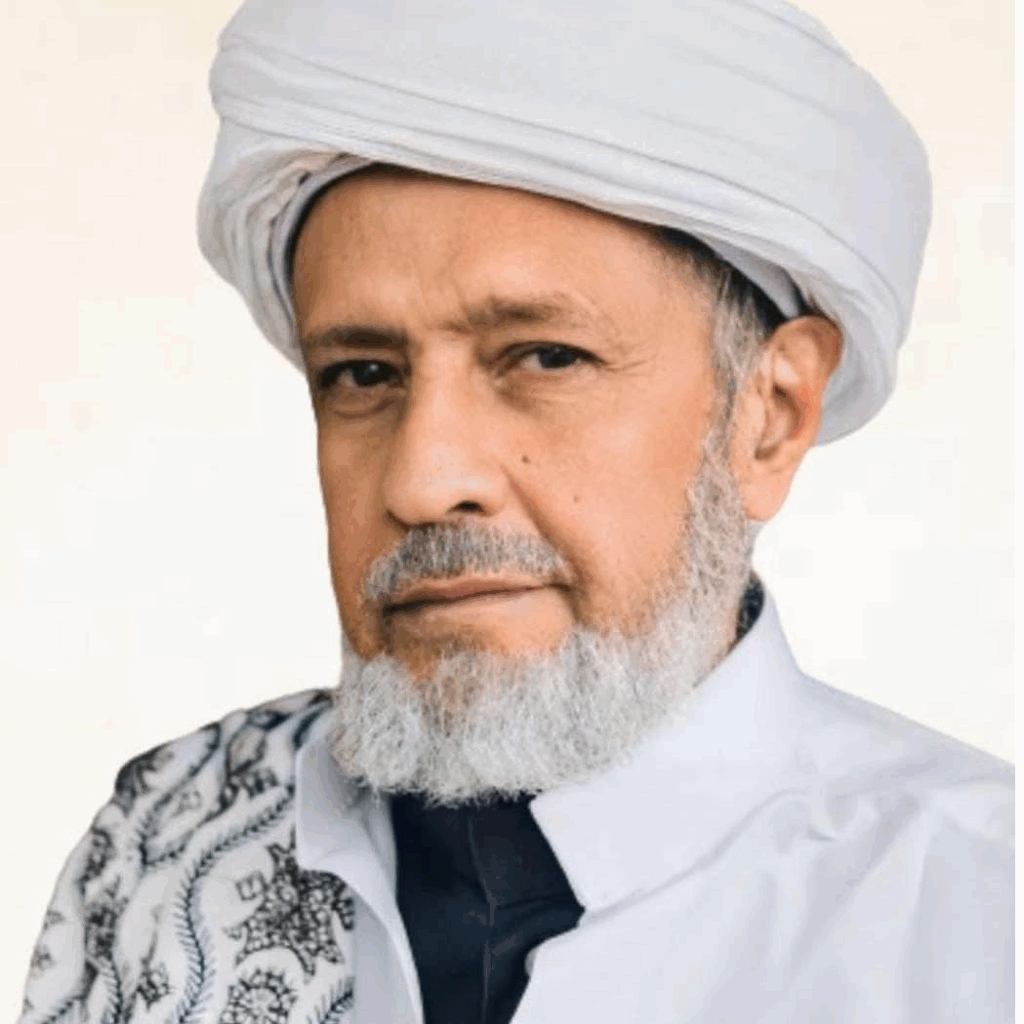
There are figures who, though living outside the spotlight, leave a deep imprint in people’s hearts and in the spiritual life of entire communities. When one of these masters passes away, the grief is not only personal: it is as if a lamp that offered guidance, solace, and a call to the essential has been extinguished. It is in this feeling, woven of gratitude and supplication, that many believers mourn the passing of Shaykh Habib Omar ibn Hamid al-Jilani (1950- 23.01.2025), a figure of the prestigious Hadrami tradition of Yemen, asking Almighty Allah to envelop him in His boundless mercy.
Knowledge that nourishes, not divides.
The trait most often recognized in true spiritual educators is not just the vastness of their knowledge, but the ability to nurture: to shape people, not simply transfer information. A true educator does not use knowledge to dominate, to shine, or to create factions; rather, they make it a path of care, balance, and maturation.
In the remembrance of Shaykh Habib Omar ibn Hamid al-Jilani, this very trait emerges: an educator and guide who dedicated his life to the service of sacred knowledge in a sober, balanced, and clear approach, anchored in the prophetic way and within the tradition of Ahl al-Sunna wa'l-Jamaʿa. In times when religion can be reduced to slogans, confrontations, or superficial identities, his work is evoked as a call to the "center": Islam lived with clarity, mercy, and a sense of priorities.
Mecca as a school: teaching in the place of the return to Allah
The sacred city represents the return, the direction, the essential. A master who teaches there for years, amidst the flow of pilgrims and the constancy of residents, inevitably becomes a meeting point between diverse worlds: languages, histories, sensibilities.
Shaykh Habib Omar ibn Hamid al-Jilani is remembered as a prominent scholar in Mecca and a mufti in the Shafi'i madhhab. His specialization in the field of prophetic traditions (Hadith) made him a widely recognized point of reference. But more than the positions he held, what remains is the substance of his decades of service: teaching the Quran, the Sunna, and jurisprudence (fiqh). Alongside this, there was an "education of the heart": that patient work of inner rectification, purification of intention, discipline of the ego, and growth in adab.
His study circles are described as places of depth and clarity, but also of compassion: not cold lecture halls, but spaces where knowledge was accompanied by a human tone, capable of welcoming the seeker, the traveler, the doubtful, the wounded.
Knowledge as Transformation: Khashya, Action, Sincerity, and Adab
In the Islamic tradition, knowledge is not considered authentic unless it produces real change. **It is not enough to "know": that knowledge must generate khashya, the reverential fear, the awareness of Allah that makes one humble and vigilant. This is a crucial difference: knowledge that inflates the ego is not light; knowledge that leads to righteousness, spiritual modesty, and gentleness is a sign of blessing.
This is why, in the remembrance of the Shaykh, a central idea often resurfaces: the true understanding of religion manifests in character and conduct. Jurisprudence without sincerity becomes aridity; spirituality without adab becomes confusion; a call to Allah without mercy becomes harshness. His life is therefore narrated as a living testimony that knowledge and action must walk together: study with worship, words with example, guidance with care for people.
And there is another subtle but fundamental aspect: the attention to the "states" of those around him. A true master does not merely correct ideas; he notices fragilities, encourages without humiliating, and admonishes without breaking spirits. Many have perceived him with the warmth of a "paternal" educator, able to combine authority and compassion.
Perseverance until the end: Dying "during the journey"
In the Islamic tradition, perseverance (thabat) is an immense gift: to remain steadfast in goodness, to continue serving, not to interrupt the call to Allah when fatigue grows. His death is remembered with a powerful image: that of a man who remained active in teaching and calling to what is good until his last breath, for the Shaykh passed away while traveling to Jakarta on a mission of da'wah and teaching. This detail reveals much: not withdrawn in quiet, but on a journey where the community called him.
He is spoken of as a "man on a journey" on the path of Allah: an expression that evokes the idea of leaving something for God, of moving inwardly and materially towards what is most pleasing, and of living life as an intentional movement. It is a spiritual reading of the end: not just the closure of a biography, but the fulfillment of a direction.
A prayer that becomes a responsibility
When a great teacher passes away, the community does not merely mourn: it questions. Who will continue to teach with balance? Who will be able to unite rigor and mercy? Who will protect seekers from aggressive simplifications, polemical simplifications, sectarianism?
For this reason, the invocations do not only ask for forgiveness and mercy for the deceased, but also for a "succession" of men and women of knowledge who embody the same ethos: scholars who act according to what they know, guides who seek not prestige but usefulness, educators who bring back the beauty of the Sunna and the centrality of adab.
In the Quran, Allah the Most High reminds us that whoever sets out on the path to Him will find their reward with Him. This promise — which believers often cite in times of mourning — is not a generic comfort: it is a way of entrusting to God what no human word can measure.
Conclusion: the loss of a person, the permanence of a light.
The passing of Shaykh Habib Omar ibn Hamid al-Jilani is a sorrow, but also a call. It reminds us that knowledge is not an ornament: it is service. That authentic guidance is not a spectacle: it is presence. That religion, when understood at its core, produces reverential fear, sincerity, and kindness, not arrogance and contention.
May the prayer remain that Allah welcomes him into His mercy, elevates his rank among those who have united knowledge and action, and grants the Umma a continuity of masters capable of transmitting not only texts and rules but also light, balance, and compassion.
Omar Messaoui