

The Islamic Will – al-Wasiyyah

A Spiritual Journey Through Fasting and Awareness
March 2, 2025
The Transformative Power of Ramadan: Faith and Health
March 9, 2025
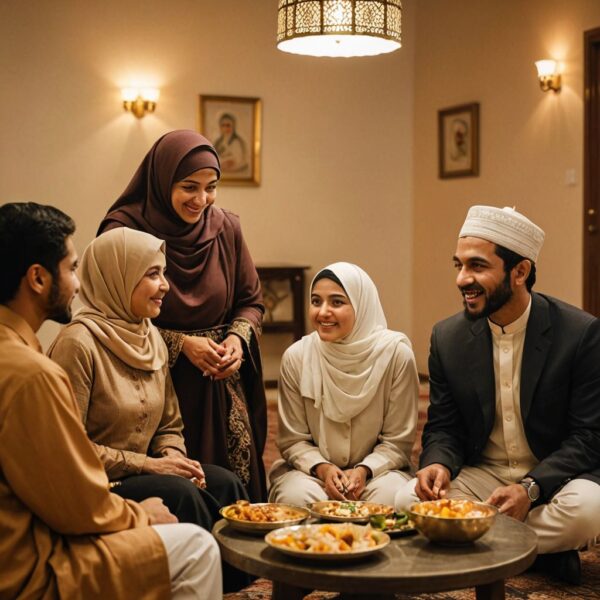
Muslims in dialogue, sharing resources and promoting cohesion through the Wasiyyah Wasiyyah.
The Islamic will (al-Wasiyyah الوصية) is an essential tool in the estate planning of Muslims, allowing up to one-third of the estate to be allocated to non-heir beneficiaries. Governed by the Quran and Sunnah, it represents a balance between religious tradition and modern legal principles, promoting dialogue and inclusion within European legal systems.
Conceptual Meaning of al-Wasiyyah [الوصية]
The concept of al-Wasiyyah in Islam carries a profound and nuanced meaning. Linguistically, the term derives from the Arabic word waṣā, which means “to command,” “to instruct,” “to obligate,” or “to convey.” According to the lexicographer J. Milton Cowan, Al-Wasiyyah can also mean “bequest” and “testamentary disposition.” The literal meaning suggests “the imposition on someone or the command of something,” but technically it refers to “a special promise to donate something after death.”
Secondo l’Imām Muḥammad Idrīs al-Shāfi’ī, la Wasiyyah significa “destinare la propria ricchezza o proprietà a qualcun altro dopo la morte, attraverso un atto di benificenza (tabarrū)“. […وصل ما كان فيه من امر حياته بام بعده من امر مماته].
In other words, it is a set of instructions given by a person to the individuals they expect to survive them. According to lexicographers, the term “wasiyyah” evokes making an instruction into something operational and binding. In Shari’a, the wasiyyah is considered a will that must be carried out after the death of the person who prepared it.
Therefore, waṣiyyah can be seen as an extraordinary directive, prepared by a person regarding certain duties or obligations pending towards them, which they have not explicitly or implicitly fulfilled before their death. In other words, it is a set of instructions given by the person to the subjects whom they expect to survive them, in order to fulfill such duties or obligations remaining in suspended.
| No. | Qur’anic Usage | Connotation | Surah & Verse |
|---|---|---|---|
| 1. | waṣṣā | Legacies | Surah al-Baqarah, 132; Surah al-Shūra, 13 |
| 2. | waṣṣākum | Command | Surah al-An‘ām, 151, 152 & 153 |
| 3. | waṣṣaynā | Directive | Surah al-Nisā’, 131 |
| 4. | wawaṣṣaynā | Directive | Surah al-‘Ankabut, 8; Surah Luqmān, 14; Surah al-Shūra, 13; Surah al-Aḥqāf, 15 |
| 5. | wa’awṣānī | Enjoined on me | Surah Maryam, 31 |
| 6. | yūṣīkum; yūṣī; e yūṣā | Directive/ Command | Surah al-Nisā’, 10 & 11 |
| 7. | waṣiyyah | Legacies/ bequests | Surah al-Baqarah, 180; 240; Surah al-Nisā’, 11; Surah al-Mā’idah, 106 |
| 8. | tawṣiyatan | Bequest/ will | Surah Yasin, 50 |
| 9. | tūṣūna | Bequeathed | Surah al-Nisā’, 12 |
| 10. | yūsīna | Bequeathed | Surah al-Nisā’, 12 |
Source: Muḥammad Fuwād ‘Abd al-Bāqī, al-Mu‘jam al-Mufahris li Alfāẓ al-Qur’ān al-Karīm (Beirut: Dār al-Fikr, 1987)
Introduction to the Islamic Will (al-Wasiyyah)
An Islamic will [‘al-Wasiyyah’ الوصية] is a settlement document containing instructions [to the will executor] to implement the wishes of the will testator including the plans and wealth distribution after the death of the testator, in which the testator [on writing the Wasiyyah] has to make a disposition of their assets that respects the specific requirements and recommendations set by the Quran and Sunnah.
First, it was obligatory for a Muslim to make a Wasiyyat for the parents and relatives, based on the verse of the will in which Allāh said:
“It is prescribed for you, when death approaches any of you, if he leaves wealth, to make a bequest in favour of parents and relatives according to what is acceptable - a duty upon the righteous”.
كُتِبَ عَلَيْكُمْ إِذَا حَضَرَ أَحَدَكُمُ الْمَوْتُ إِن تَرَكَ خَيْرًا الْوَصِيَّةُ لِلْوَالِدَيْنِ وَالأقْرَبِينَ بِالْمَعْرُوفِ حَقًّا عَلَى الْمُتَّقِينَ
[Quran: Al-Baqarah -180]
However, in the verse of inheritance, in sūrat An-Nisāʾ, Allāh explained the share of each heir, and eventually, as stated in the hadith narrated by Imām Ahmad [in Al-Musnad] and also by Abī Dāwūd, Al-Nasāʾī, at-Tirmidhī and Ibn Mājah, the prophet ﷺ prohibited al-Wasiyyahfor the heirs.
It is narrated on the authority of ‘Amr ibn Khārija that the Prophet ﷺ delivered a Khutbah [sermon] while riding his she-camel, and ‘Amr heard him say, “Allāh has given everyone who is entitled his rights, so there shall be no will for an heir.”
[Sunan at-Tirmidhī]
Nevertheless, in reference to the following hadith, Islam strongly enjoins whoever has something to bequeath to write a testament within one third of their property.
Allāh's Messenger ﷺ said, "It is not permissible for any Muslim who has something to will to stay for two nights without having his last will and testament written and kept ready with him."
عَنْ عَبْدِ اللَّهِ بْنِ عُمَرَ ـ رضى الله عنهما ـ أَنَّ رَسُولَ اللَّهِ صلى الله عليه وسلم قَالَ " مَا حَقُّ امْرِئٍ مُسْلِمٍ لَهُ شَىْءٌ، يُوصِي فِيهِ يَبِيتُ لَيْلَتَيْنِ، إِلاَّ وَوَصِيَّتُهُ مَكْتُوبَةٌ عِنْدَهُ
[Ṣaḥīḥ di al-Bukhārī]
The testamentary capacity in Islam: rules and limits
The testamentary capacity of an individual in Islam is hence restricted. According to the famous hadith of Saʿd ibn Abī Waqqāṣ, one of the heaven-bound companions [may Allāh be pleased with him], the prophet ﷺ clearly states that the will must not exceed one third of the property.
Saʿd ibn Abī Waqqāṣ, went to the hajj with the prophet ﷺ and fell sick. And he was so sick that he thought that he was about to die. So, he requested the attendance of the prophet ﷺ and the prophet ﷺ went to visit him. Saʿd told the prophet ﷺ “o prophet you see how sick I am”. He went on telling the prophet ﷺ that he had a lot of money, and he at the moment had one daughter that she would inherit just a portion. He wanted to know if he could write a will where he would give a huge percentage of his wealth away upon his death
Narrated by Saʿd bin Abī Waqqāṣ: “The Prophet ﷺ came visiting me while I was sick in Makkah. I said, “O Allāh’s Messenger! May I will all my property [in charity]?” He said, “No.” I said, “Then may I will half of it?” He said, “No.” I said, “One-third?” He said, “Yes, one third, yet even one third is too much. It is better for you to leave your inheritors wealthy than to leave them [poor] begging others, and whatever you spend for Allāh’s sake will be considered as a charitable deed, even the handful of food you put in your wife’s mouth is considered to be charity”
[Ṣaḥīḥ al-Bukhārī]
It is therefore important, as a Muslim, to know the difference between all these concepts, as understandably this can cause rifts between family members when it comes to inheritance. If followed properly, Islamic law should result in less family dispute because ultimately the person does not make decisions as to who should inherit ⅔ of his estate upon his death, but it is what Allāh has ordained regarding inheritance, with a freedom of the person leaving ⅓ to whomever he or she wills, with the restrictions in place to avoid disputes. In other words, the Islamic law allows a person to bequeath up to ⅓ (one third) of his or her estate to whomever he or she wishes, provided the beneficiaries are not from amongst those who will benefit from the remaining ⅔ [two thirds].
In other words, Islamic law allows an individual to allocate up to one-third (⅓) of their estate to anyone they wish, provided that the beneficiaries do not belong to the categories of heirs who will receive the remaining two-thirds (⅔).
Those who are entitled to the final ⅔ [two thirds] of the estate, the fixed heirs, [اصحاب الفروض] are set out in the Quran. For those categories, your son, your daughter, your father and your mother, your spouse [the husband or wife], etc, when you are alive, you can give them whatever you wish [gift هبة], but you can never write down for them in a testament what to bequeath, because Allāh has already given them a share if they are alive at the time of your death.
Hibah, Mīrāth, and Wasiyyah: fundamental differences
The money that you have belongs to Allāh. In life we are only ‘trustees’ of the wealth that we own during our lifetime. Allāh has prescribed set shares for the inheritors contained in sūrat An-Nisāʾ verse 11-14. When a person passes away, the inheritors become shared owners of everything that is left behind. So, Allāh allows you temporary ownership of it while you are alive. You can do whatever you want to do with your wealth on condition that it is within the pleasure of Allāh. And if ever you have to spend something in a wrong way, or you have earned it through wrong means, you need to seek forgiveness from Allāh and repair the damage. The minute you die, Allāh says, your wealth will be divided the way we want it to be divided. But we only give you a certain portion that we would allow you to give people whom we have not already decided will be getting a portion. So, if Allāh already decided that some people are going to get a portion from your wealth, you cannot decrease or increase that. But if Allāh didn’t speak about certain categories, your friends, your distant relatives, a Muslim or a non-Muslim, whoever they may be, if you want to give them something, you are allowed within ⅓ [one third] of your wealth.
It is important as well to note that there is a big difference between “Hibah”, “Mirath – Faraid and “Wasiyyah”. In order to make an Islamic will, you therefore need to know what you are permitted to gift, bequest, and what is the mandatory inheritance portion [‘faraid’] prescribed in the Quran and Sunnah.
These are hence the three concepts that are particularly relevant when considering Islamic wills:
- gifts[‘hibah’ هبة] in Islam, a person is permitted to gift their assets to whomever they want during their lifetime. And to be truly regarded as a gift, they cannot have conditions attached to them. The ownership of the gift must be transferred over to the person to whom they are gifting immediately.
- ‘faraid’ or ‘mirath’ مراث is the fixed inheritance as prescribed by the Islamic law and these fixed shares cannot be changed under any circumstances. The underpinning principle is that Allāh is the ultimate owner of everything that we own and all our wealth.
‘To Allāh belongs all that is in the heaven and all that is in the earth’.
لِّلَّهِ مَا فِى ٱلسَّمَـٰوَٰتِ وَمَا فِى ٱلْأَرْضِ ۗ
[Sūrat al-Baqarah, 284]
‘Believe in Allāh and His Messenger, and spend from that which He [Allāh] has made you trustees’
ءَامِنُوا۟ بِٱللَّهِ وَرَسُولِهِۦ وَأَنفِقُوا۟ مِمَّا جَعَلَكُم مُّسْتَخْلَفِينَ فِيهِ ۖ فَٱلَّذِينَ ءَامَنُوا۟ مِنكُمْ وَأَنفَقُوا۟ لَهُمْ أَجْرٌۭ كَبِيرٌۭ
[Sūrat Al-Ḥadīd:7] - Finally, the bequest[‘al-Wasiyyah’ الوصية], the act or intention of the deceased to give part of their assets upon their death by a will, a Muslim in reality only has a free choice to give up to ⅓ of their assets upon their death.
Conclusion
Islamic inheritance, or al-Wasiyyah, represents a crucial aspect of estate planning for Muslims. This instrument allows the testator to express their wishes regarding the distribution of assets after death, while adhering to well-defined limits, such as the ability to allocate only up to one-third of the estate to beneficiaries not included among the fixed heirs (asḥāb al-furūḍ).
The waṣiyyah offers the testator the opportunity to help the less fortunate. In fact, leaving a gift in one's will to a charitable cause is not only beneficial for the beneficiaries but also for the testator, as such gifts undoubtedly become a ceaseless charity (ṣadaqah al-jāriyyah), the benefits of which extend even after death.
This legal instrument and symbol of cultural identity for Muslims in Europe highlights the need to reconcile Islamic norms with the principles of justice and equality of constitutional democratic systems. The growing Muslim presence has stimulated a debate on legal pluralism, requiring a flexible and inclusive approach that respects both religious traditions and the fundamental values of European societies, thereby fostering social cohesion and intercultural dialogue.
Editorial