


Fingerprints of Allah
January 6, 2025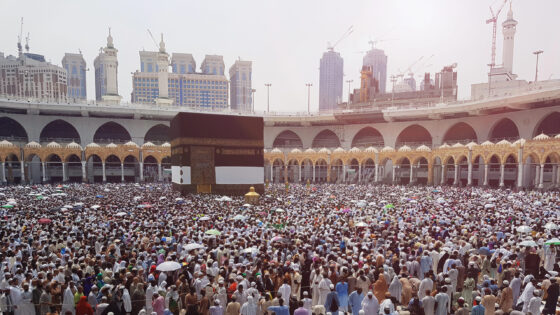
The Farewell Hajj [Ḥijjat al-Wadāʿ]
January 27, 2025
Another look at identity and beauty

Another look at beauty: the hijab as an element that enhances feminine beauty
The Dutch artist of Moroccan origin, Sarah Amrani, with her exhibition “Terror of Beauty“ on display at the Foam in Amsterdam until February 26, 2025, addresses a complex and timely theme: the intersection of technology, beauty, and cultural identity, with a particular focus on the experience of Muslim women. The exhibition aims to challenge stereotypes and open a dialogue about the representation of Muslim women in the digital age, a context in which algorithms and beauty filters often promote uniform aesthetic standards.
The veil as a symbol and cultural framework
At the center of Amrani's work is the "veil", which the artist considers not only a religious symbol but also a "visual frame" through which to explore the challenges and opportunities of Muslim female identity in the digital age. In a key piece of the exhibition, a hologram projects a "perfect" face according to certain aesthetic standards, but the veil remains unchanged, a symbol that resists aesthetic manipulation. This contrast highlights how the veil eludes attempts to conform to dominant beauty standards, becoming a powerful tool of resistance and independence.
Critique of beauty standards
The exhibition critiques the standardization of beauty promoted by social media and digital technologies. Amrani highlights how algorithms favor uniform physical traits, marginalizing individuality and cultural diversity. The artist denounces the pressure placed on Muslim women to alter their natural features to conform to an imposed aesthetic ideal, a phenomenon amplified by beauty filters and social platforms.
Technology as an opportunity for expression
Despite the criticism, Amrani also acknowledges the positive potential of technology. An example is the digital filter that allows visitors to apply the traditional beauty marks of the Amazigh people, an indigenous ethnic group from North Africa, to their own faces. This approach demonstrates how technology can be used to celebrate and preserve cultural traditions, offering new possibilities for personal expression..
An alternative narrative
Amrani hopes that her exhibition will help humanize Muslim women in the Netherlands, where the Moroccan community is often ostracized. Her art provides an alternative narrative, showing how Muslim women actively participate in contemporary debates on beauty, technology, and identity.
With "Terror of Beauty," Sarah Amrani invites the audience to reflect on complex and interconnected themes, challenging conventions and offering an inclusive and multifaceted vision of Muslim female identity. The exhibition is not only a critique of beauty standards but also an exploration of the possibilities offered by technology to redefine aesthetics and celebrate cultural diversity.
Maryam Adnani