


Attack on the Crocus City Hall in Russia
March 23, 2024
Spiritual Rebirth in Ramadan
March 29, 2024The article analyzes the benefits and rewards of fasting in Islam, highlighting this practice not only as an act of voluntary abstinence from food, drinks, and physical pleasures from dawn to sunset but also as a significant exercise of faith and spiritual dedication. It is emphasized that fasting, prescribed by Allah to both the Muslim community and those who came before it, aims primarily to develop At-Taqwā, the awareness of Allāh.

Fasting in Islam is the abstaining [with intention] from things that break the fast, from the rising of the second dawn until sunset. It is primarily an exercise of devotion to willingly renounce oneself, for a definite period of time from all bodily appetites in order to form spiritual discipline and self-control.
Allāh ﷻ says in the holy Qurʾān:
<<(…) vi è prescritto il digiuno come era stato prescritto a coloro che vi hanno preceduto. Forse diverrete timorati>>
يَا أَيُّهَا الَّذِينَ آمَنُوا كُتِبَ عَلَيْكُمُ الصِّيَامُ كَمَا كُتِبَ عَلَى الَّذِينَ مِن قَبْلِكُمْ لَعَلَّكُمْ تَتَّقُونَ
[Surah al-Bakara: 183]
Benefits and rewards of fasting
At-Taqwā [God’s consciousness] as mentioned in this verse, is the developing of a correct relationship with Allāh ﷻ. Fulfilling your duties and obligations unto Allāh ﷻ, His instructions in a beautiful way, and staying away from His prohibitions after having known them and understood them. Staying away from them for His pleasure and to be protected from His anger and punishment.
The beauty of fasting is that Allāh made it mandatory [fardh] on the umma [Muslim community], just as he made it mandatory for the umma that came before, so that we can have this bear minimum of piety – At-Taqwā [God's consciousness]
We typically hear about the rewards of fasting when Ramaḍān comes around. Ramaḍān is the ninth and holiest month of the Islamic calendar. In this holy month, the fourth pillar of Islam, fasting is strictly observed.
There are however different voluntary days of fasting regarded as Sunnah that yield abundant rewards as well, that we probably are either unaware of, or are not as explicit but they have such meaningful consequences in our life.
The fasting person fulfills the Sunnah of the prophet ﷺ
To achieve the rewards of sunnah is a significant benefit. Our beloved messenger used to fast Mondays and Thursdays. He also used to fast the middle three days of the month, that are known as Ayyām al-Bīḍ [ایّام البیض], the white days, because the moon is fullest on the 13th, 14th and 15th of every lunar month. This was the way of our beloved prophet ﷺ and the way of the righteous that came before us, that we should imitate.
The prophet ﷺ in one hadith mentions that whoever fasts three days of the month is as if they have fasted the entire year. Why, because a good deed is rewarded at the very least by ten times!
عَنْ أَبِي عُثْمَانَ، عَنْ أَبِي ذَرٍّ، قَالَ قَالَ رَسُولُ اللَّهِ ﷺ ” مَنْ صَامَ ثَلاَثَةَ أَيَّامٍ مِنَ الشَّهْرِ فَقَدْ صَامَ الدَّهْرَ كُلَّهُ
[Sunan Al-Nasāʾī].
By fasting the six days of Shawwāl for example, you meet Allāh with a lifetime of fasting, a life time of pleasing Him. The prophet ﷺ mentioned that whoever fasts Ramaḍān and follows it with six days of Shawwāl, is as if he fasted the entire year. And he gave us the logic that fasting one month is like ten months because the minimum of a good thing is times ten. Adding six days to that is like fasting two additional months, so two plus ten [months] is an entire year.
The prophet ﷺ described to us his companion Dāwūd [Alay-hi 's-salām] by saying that the best fasting is the fasting of Dāwūd.
Allāh’s Messenger ﷺ said to me, "The most beloved fasting to Allāh was the fasting of [the Prophet] Dāwūd, who used to fast on alternate days. And the most beloved prayer to Allāh was the prayer of [the prophet] Dāwūd who used to sleep for [the first] half of the night and pray for a third of it and [again] sleep for a sixth of it."
عن أبي أيوب الأنصاري رضي الله عنه قال, أن رسول الله ﷺ قال, من صام رمضان ثم أتبعه ستا من شوال فكأنما صام الدهر
[Ṣaḥīḥ Muslim].
Narrated by Abū Ayyūb, the prophet ﷺ said:
““Whoever fasts the month of Ramaḍān and then follows it with six days of fasting in the month of shawwāl, it will be as if he has fasted the year through.”.”
أَحَبُّ الصِّيَامِ إِلَى اللَّهِ صِيَامُ دَاوُدَ، كَانَ يَصُومُ يَوْمًا وَيُفْطِرُ يَوْمًا، وَأَحَبُّ الصَّلاَةِ إِلَى اللَّهِ صَلاَةُ دَاوُدَ، كَانَ يَنَامُ نِصْفَ اللَّيْلِ وَيَقُومُ ثُلُثَهُ وَيَنَامُ سُدُسَهُ .
[Ṣaḥīḥ Muslim].
Abū Hurayra, the companion of the prophet said:
“My friend, the Prophet ﷺ, advised me to observe three things:
to fast three days a month; to pray two rakaʿāt of aḍ-Ḍuḥā [forenoon prayer]; and to pray witr before sleeping“.
عَنْ أَبِي هُرَيْرَةَ ـ رضى الله عنه ـ قَالَ أَوْصَانِي خَلِيلِي صلى الله عليه وسلم بِثَلاَثٍ صِيَامِ ثَلاَثَةِ أَيَّامٍ مِنْ كُلِّ شَهْرٍ، وَرَكْعَتَىِ الضُّحَى، وَأَنْ أُوتِرَ قَبْلَ أَنْ أَنَامَ.
[Ṣaḥīḥ al-Bukhārī].

The breath of the fasting person is pleasing to Allāh ﷻ.
We want to be in a state when everything we do and say is in Riḍā to Allāh ﷻ. When the breath of the fasting person is described as pleasing to Allāh ﷻ, without dhikr, without the remembrance of Allāh, what then the one who beautifies the breath with Dhikr
Narrated Abū Hurayra: The Prophet ﷺ said, "“[ Allāh said], 'Every good deed of ʾĀdam’s son is for him except fasting; it is for Me. and I shall reward [the fasting person] for it'. Verily, the smell of the mouth of a fasting person is better to Allāh than the smell of musk“.
عَنْ أَبِي هُرَيْرَةَ ـ رضى الله عنه ـ عَنِ النَّبِيِّ ﷺ قَالَ “ كُلُّ عَمَلِ ابْنِ آدَمَ لَهُ، إِلاَّ الصَّوْمَ فَإِنَّهُ لِي، وَأَنَا أَجْزِي بِهِ، وَلَخَلُوفُ فَمِ الصَّائِمِ أَطْيَبُ عِنْدَ اللَّهِ مِنْ رِيحِ الْمِسْكِ
[Ṣaḥīḥ al-Bukhārī].
The days of a fasting person end with an accepted duʿāʾ..
The fasting person is among the category of people whose duʿāʾs are accepted, until they break their fast [ṣawm]. In other words, the fasting person at the time of his break has a duʿāʾ that will not be rejected Narrated Abū Hurayra: The Messenger of Allāh ﷺ said: “There are three whose duʿāʾ is not rejected: a just ruler, the fasting person when he breaks his fast and the prayer of the oppressed person. It rises above the clouds and the gates of heaven are opened for it, and the Lord, may He be glorified, says, ‘By My Glory [Might] I will answer you even if it is after a while“.
:عن أبي هريرة عن النبي ﷺ قال
ثَلَاثٌ لَا تُرَدُّ دَعْوَتُهُمْ، الإِمَامُ العَادِلُ، وَالصَّائِمُ حِينَ يُفْطِرُ، وَدَعْوَةُ المَظْلُومِ يَرْفَعُهَا فَوْقَ الغَمَامِ، وَتُفَتَّحُ لَهَا أَبْوَابُ السَّمَاءِ، وَيَقُولُ الرَّبُّ عَزَّ وَجَلَّ: وَعِزَّتِي لَأَنْصُرَنَّكِ وَلَوْ بَعْدَ حِينٍ
[Sunan at-Tirmidhī].
Usually when you look at the times when the duʿāʾ is answered, it has to do with things that are completely out of your control, like when it rains, or when you travel. But fasting is a condition you chose when you want to. The prophet ﷺ mentioned that at the end of the day when you are most tired, when you are most broken, when you are most vulnerable, and you have made that sacrifice for Allāh, your day ends with an accepted duʿāʾ.
So, it starts with Allāh and the angels praying for you, and it ends by you praying to Allāh with an accepted duʿāʾ.
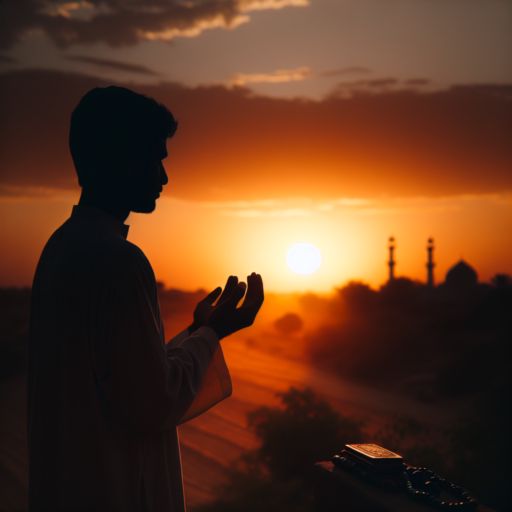
The fasting person has two joys::
Narrated Abū Hurayra [may God be pleased with him] that the Prophet ﷺ, said: “The fasting person has two joys: joy when he breaks his fast, and joy when he meets his Lord”.
أخرج الإمام مسلم من حديث أبى هريرة ــ رضى الله عنه ــ أنَ النبى صلى الله عليه وسلم قال: للصائم فرحتان: فرحة حين يفطر وفرحة حين يلقى ربه
[Sunan at-Tirmidhī].
1. he joy of achieving fasting
It is the joy of reaching breaking the fast, and Allāh has designated the fasting person with joy to prove that this joy is for the righteous. He has proven the superiority of the Hereafter over this world. Because this world is where the fasting person rejoices in breaking the fast, eating, drinking, and receiving the reward. Joy cannot be real except with the completion of the fast, and the heart is not happy except with the tranquility of the soul, brought about by the sincerity of faith in achieving the purpose of fasting in refining the soul. His joy in breaking his fast is only in terms of the completion of his fast, the conclusion of his worship, and the relief and help of his Lord.
2. o The joy of reaching heaven and meeting Allāh
Allāh promised that the one who enjoys fasting in this world will be happy and filled with joy by fasting when he meets Allāh Almighty, in his saying: [And joy when he meets his Lord], so it means that this world has the pleasure of the bodies and the souls are subordinate to it, and as for the afterlife, the basic principle is the enjoyment of the souls and the bodies are subordinate to it.
Editorial Team