


The importance of intention in Islam
February 7, 2024
Frosinone Assize Court verdict
February 15, 2024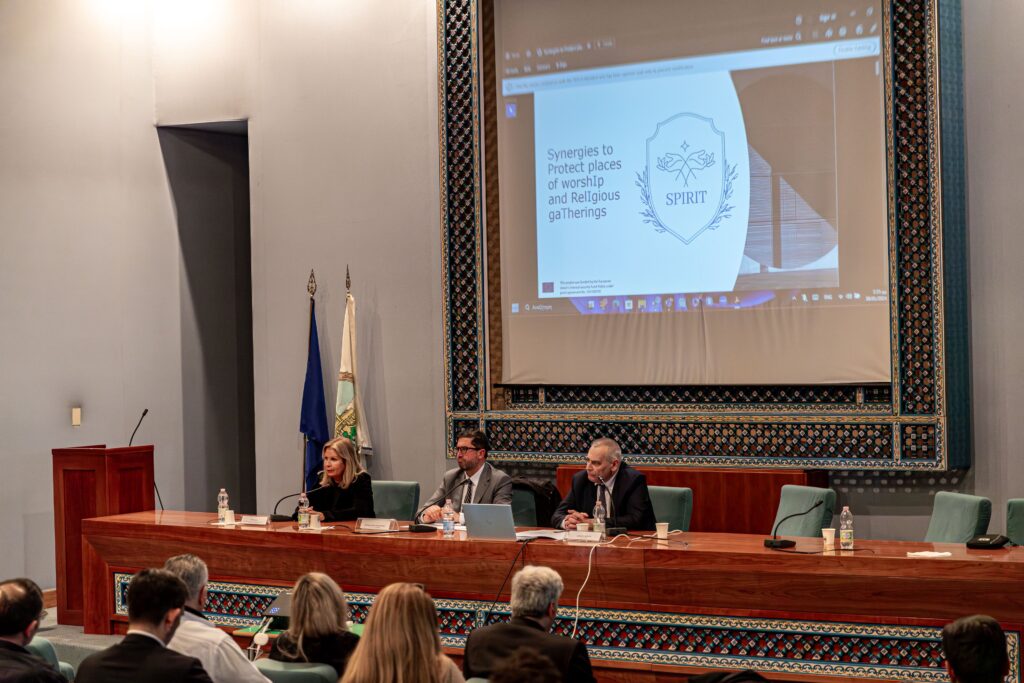
On January 30, 2024, the Great Mosque of Rome hosted an important workshop on "The role of institutions, religious communities, and civil society in the protection of places of worship.There was extraordinary participation from eminent figures from various fields, contributions from institutions and law enforcement, as well as analyses and exemplary practices in prevention.
In recent years, the protection of sacred sites has emerged as a matter of considerable importance in international debate. These sites, which represent the spiritual and cultural heart of numerous communities around the world, are often vulnerable during periods of tension and conflict.
Workshop on the protection of places of worship.
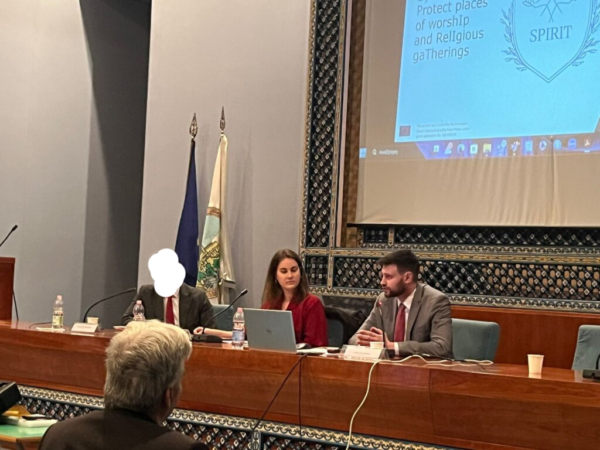
On January 30, 2024, at the Islamic Cultural Center of Italy, an interesting Workshop was held on 'The role of institutions, religious communities, and civil society in the defense of places of worship' as part of the SPIRIT Project, 'Synergies to protect places of worship and religious gatherings.' The event, organized by Europe Islamic Association (EIA) in collaboration with the Great Mosque of Rome, was characterized by the participation of eminent figures from various fields, all united with the common goal of strengthening security in sacred places and supporting freedom of worship.
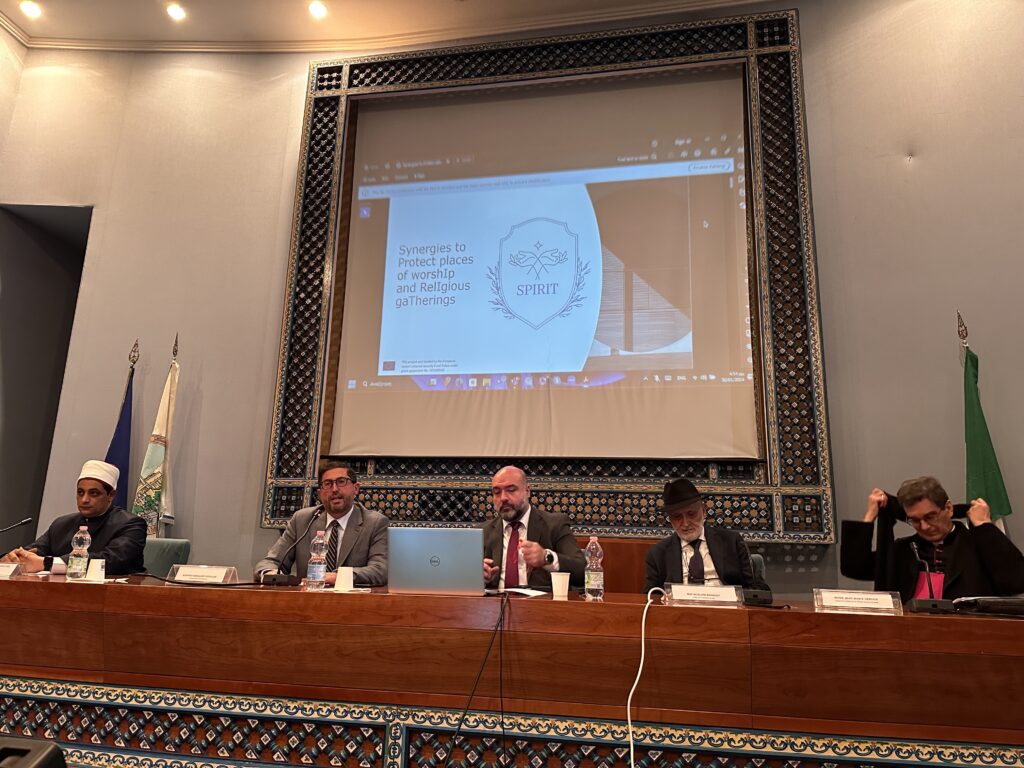
Among the prominent speakers were Shaykh Rifaey al Shahat abd Rabou Eissa, Imam of the Great Mosque of Rome, Rabbi Scialom Bahbout, president of CIRS, and Monsignor Jean-Marie Gervais, Coadjutor Prefect of the Papal Basilica of Saint Peter in the Vatican. These religious authorities shared their views on the need to protect places of prayer and to counteract all forms of extremism and intolerance.
" The Imam of the mosque in Rome has categorically expressed Islam's stance against extremism, emphasizing the importance of forging bonds between different communities and promoting an atmosphere of peaceful coexistence. The Great Mosque of Rome plays a pivotal role in educating members of the Muslim community and in spreading a message of peace and dialogue. Through educational and cultural initiatives, the center actively endeavors to foster mutual understanding between Muslims and members of other faiths, thereby contributing to the construction of an inclusive and harmonious society.
Civil Institutions
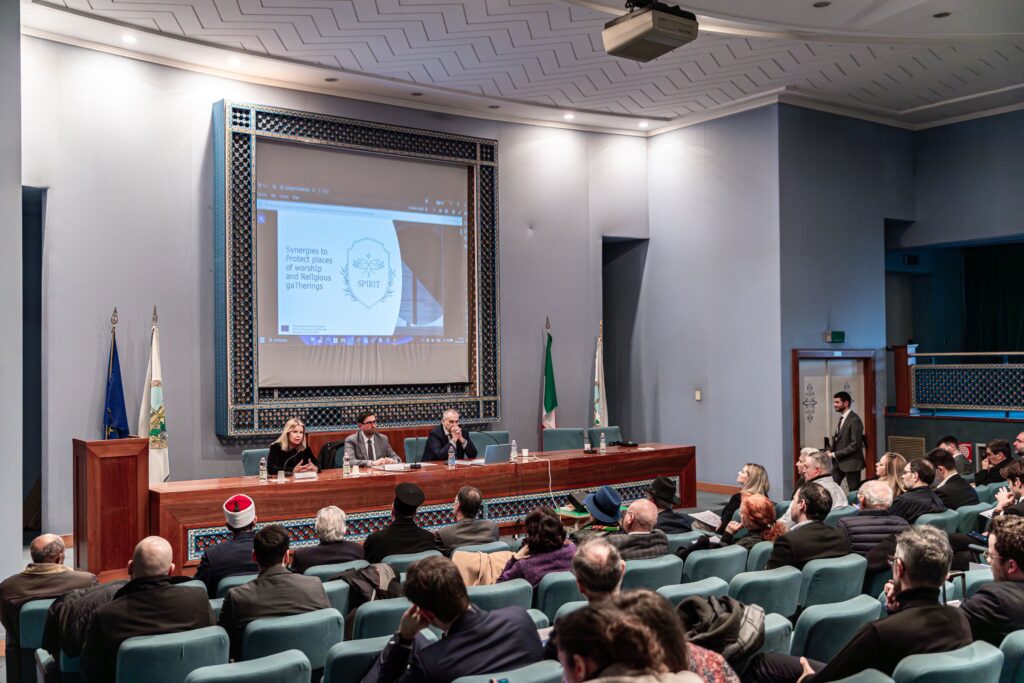
On the institutional front, the event was graced by the extraordinary participation of Prefect Laura Lega, who heads the Department of Civil Liberties and Immigration at the Ministry of the Interior, joined by Prefect Alessandro Tortorella, director of the Central Directorate for Affairs of Cults. Prefect Lega, in her address, highlighted the crucial role of the state in guaranteeing freedom of worship and the protection of places of worship. The Prefect of Rome, Lamberto Giannini, emphasized the Italian government's commitment to preventing violent extremism and securing places of worship.
SPIRIT Project
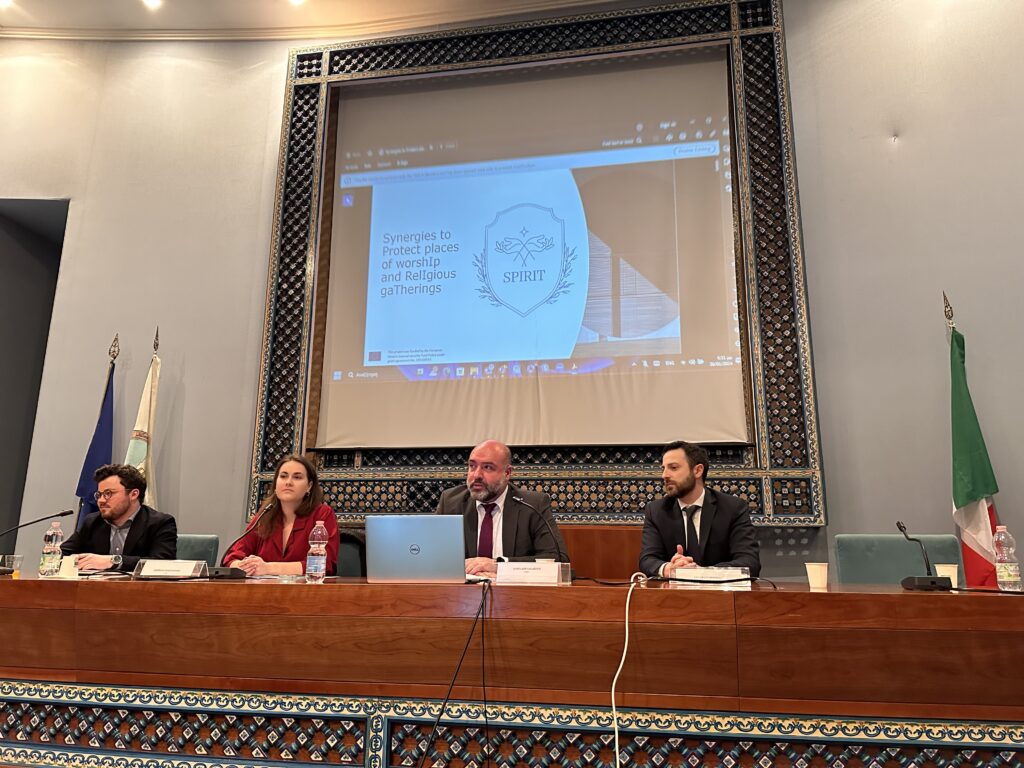
The workshop was divided into various thematic sessions. The panel on vulnerability analysis was opened by Nikolaos Lalazisis of KEMEA, as the project coordinator of the Spirit project. The panel benefited from the contributions of Federico Benolli, from the SHRINEs project, and Niklas Hamann from the SHIELDproject. Their presentations enriched the debate, offering significant insights into the most effective methodologies for the protection and security of places of worship.
Law enforcement agency
Il panel, moderato da Georgia Anagnostaki di Ianus, ha evidenziato il fondamentale contributo delle forze dell’ordine nell’ambito della sicurezza pubblica. Esperti come il dott. M.O.F. della Polizia Italiana e il Cap. Apostolos Skrekas, per la Hellenic Police, hanno arricchito la discussione con il loro sapere specialistico in materia di antiterrorismo e sicurezza. Questa sessione ha costituito un momento saliente del convegno, fornendo spunti di riflessione e condivisione di pratiche esemplari nel settore della prevenzione.
Prevention and Security
The academics Francesco Antonelli, Andrea Malizia e Marco Di Liddo enriched the discussion with their analyses and research on the phenomenon of extremism, the CBRNe threat, and the prospects related to the risk of attacks on so-called “soft targets“.
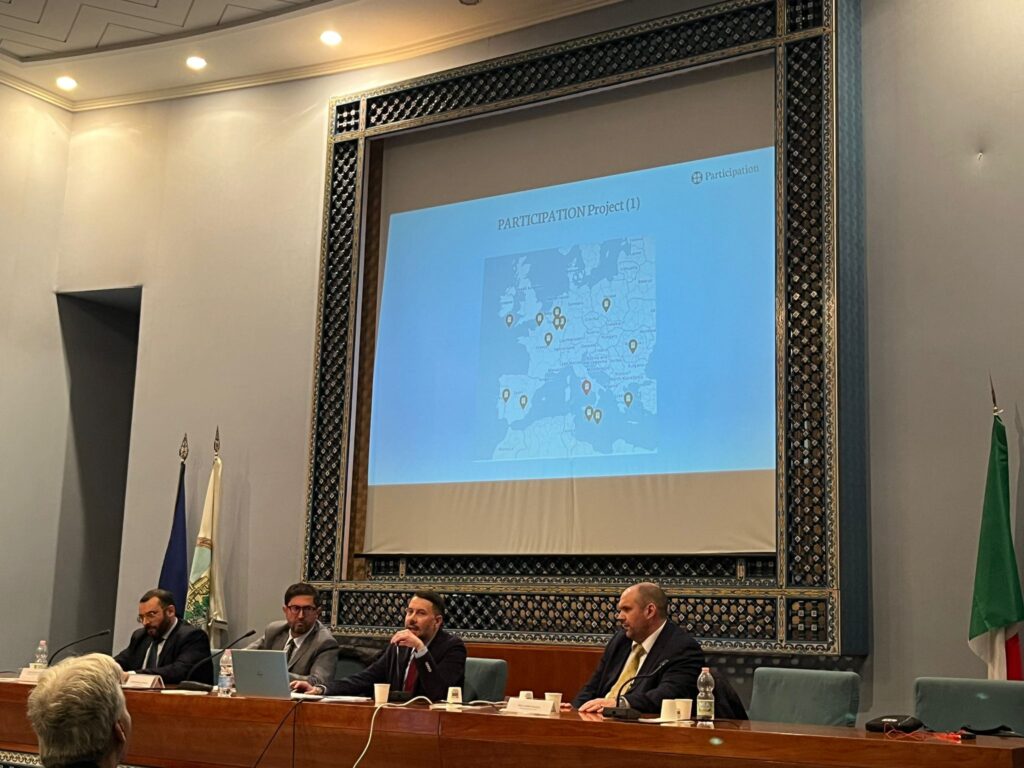
Doctor Massimo Cozzolino played a crucial role in assisting the organization and coordination of the event, providing valuable specialized expertise. His involvement underscored the vital importance of interdisciplinary collaboration for the successful implementation of complex projects.
Interreligious Dialogue
The event highlighted the commitment of the Great Mosque of Rome to promote interreligious dialogue, with significant participation from representatives of different religious denominations and associations. This commitment manifested in the goal of ensuring the protection of places of worship, emphasizing the need for a safe and respectful environment for religious practice
The key message that emerged from the meeting was the urgency of working together to overcome the barriers of ignorance and prejudice. Through dialogue, it is possible to build a more inclusive and tolerant society, where every individual can feel valued and protected in their religious identity.
Collaborative network
The meeting marked a significant step in the exchange of ideas and the creation of a collaborative network among religious authorities, institutions, law enforcement, and the academic sector. The common goal was to strengthen peace and security in sacred places, demonstrating a collective commitment to interfaith harmony.
In an increasingly globalized and interconnected world, initiatives like these are vital for strengthening human connections and promoting a culture of respect and mutual understanding. The protection of places of worship and the security of the faithful remain essential priorities, and the work carried out by EIA offers a shining example of how these goals can be pursued through joint effort and constant dialogue among all communities.
Editorial Team