


The realistic Islamic perspective of loving non-Muslims
May 18, 2023
Bleona Tafallari, the "bride of Isis", sentenced for instigation to commit a crime: the charge of terrorism is dropped
May 25, 2023Even president Zelensky flies to Jeddah

At an extraordinary meeting on 7th. May 2023 in Cairo, the Arab League resolved to allow Syria, led by President Bashar Al-Assad, to return to the international organization. On May 10, the Syrian President Assad received an official invitation from Saudi Arabia to participate in the Arab League summit which took place yesterday, May 19th. May 2023, in Jeddah
This ended a period of almost 12 years during which Syria was excluded from the organization due to its harsh responsibilities towards the Syrian people when the crisis erupted in the country. Syria's return to the Arab League represents the climax of Arab reconciliation with the regime of Bashar Al-Assad. The trend has gradually intensified in recent months, in particular, in the aftermath of the February 2023 earthquakes in Syria and Turkey.
Indeed, this trend of reconciliation of some Arab countries with Syria, with the consequent embarrassment of its suspension from the Arab League, has been going on for several years. The countries leading this move were the United Arab Emirates, which officially renewed relations with the Assad regime in December 2018, and Oman, which never actually severed them. At the same time, Egypt has shown relative openness to the Syrian regime since President El-Sisi came to power in 2014, and has not seen the removal of President Assad as crucial to resolving the Syrian crisis. In 2018, Jordan also began to strengthen its relationship with the Syrian regime and in 2021 led an Arab initiative aimed at rehabilitating Assad. Saudi Arabia's approach has also changed considerably in recent months. It will be remembered how during the first years of the Syrian civil war the Saudis represented the main opponent of the Assad regime and how they also played an active role in supporting the armed resistance.

Officially, Arab countries justified the decision to readmit Syria into the Arab League as an Arab pledge aimed at providing support to emerge from its crisis and end the suffering of the Syrian people. Ultimately, they seem to have realized that attempts to overthrow the Assad regime have failed and that he will not abide by the conditions set in the past which required him to distance himself from Iran. Just on 3rd. May and 4th, a few days before the decision of the Arab League, the Iranian president Ebrahim Raisi visited Syria. Arab states have therefore understood that it is in the Arab interest to adopt a more conciliatory approach towards the Syrian regime so as to alleviate the impact and damage suffered by Arab countries due to the war in Syria, the burden of Syrian refugees in particular, and the scourge of drug trafficking from Syria.
It seems that the final decision to readmit Syria into the Arab League depended on the Saudi change of policy which was adopted with the aim of promoting stability and economic development in the region. The announcement of the willingness to seek new diplomatic ties with Iran, under the auspices of China, marked the change of the Saudi political course.
The Saudi-Iranian deal is the deciding factor on Arab reconciliation with Syria. As a result, even the Saudi aspiration to want to release Syria from the geopolitical orbit of Iran seems to have been reduced.
In fact, Arab media reports on the Saudi-Iranian deal indicate that it was the Saudis who pushed for Syria's re-entry into the Arab League ahead of yesterday's [19th May] summit in Jeddah. This decision was taken without preliminary agreements with Syria on the issue of migrants and drug trafficking.
The Saudis lobbied countries that were most reluctant about Syria's return to the Arab League, including Kuwait, Morocco, and mainly Qatar, which as is well known, funded the arming of the Syrian opposition. The pressure paid off and the decision to return Syria to the Arab League was approved without objection by all member countries, much to the chagrin of the Syrian opposition.
Assad's participation in the Arab League summit is part of an attempt to start a political process that will lead to a global and lasting solution to the crisis in Syria. After all, there is nothing good that comes from division and fragmentation, instead, good comes from unity and interdependence in facing urgent problems and challenges, in order to start a process of national reconciliation and to continue the fight against terrorism in all its forms.
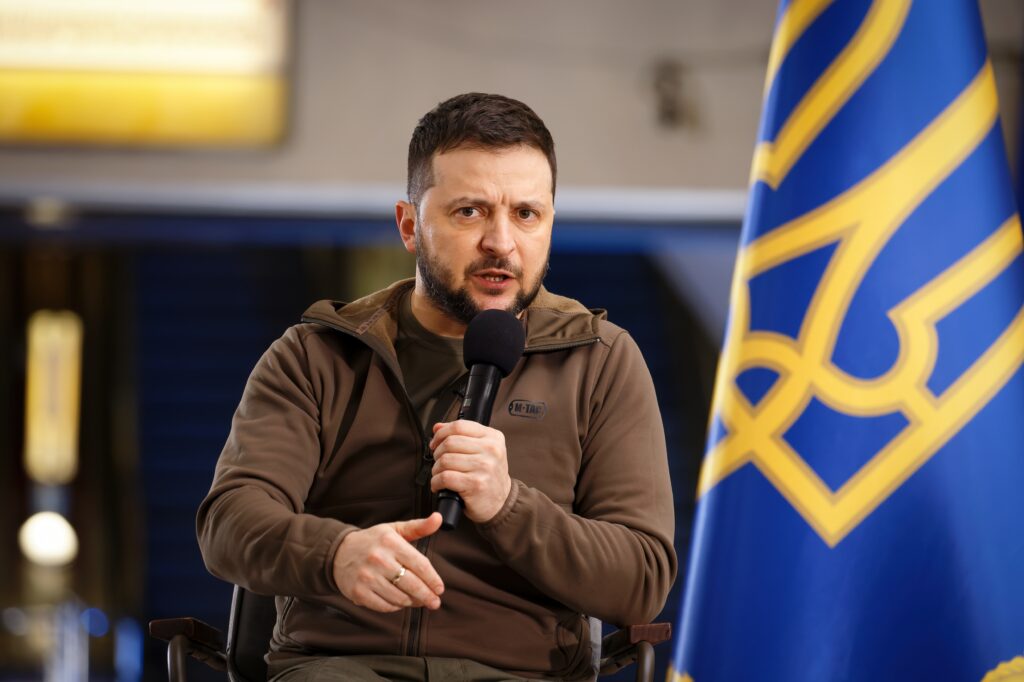
The President of Ukraine, Volodymyr Zelensky among others, attended the League summit in Jeddah, with the aim of strengthening relations with the Arab world to address energy issues and for the protection of the Muslim Tatar population in Russian-occupied Crimea, as Saudi TV al Arabya reports.
Massimo Cozzolino