

Inside the Eid al-Fitr moon wars

Insults and Threats to Ikram Jarmouni
May 13, 2023
The realistic Islamic perspective of loving non-Muslims
May 18, 2023
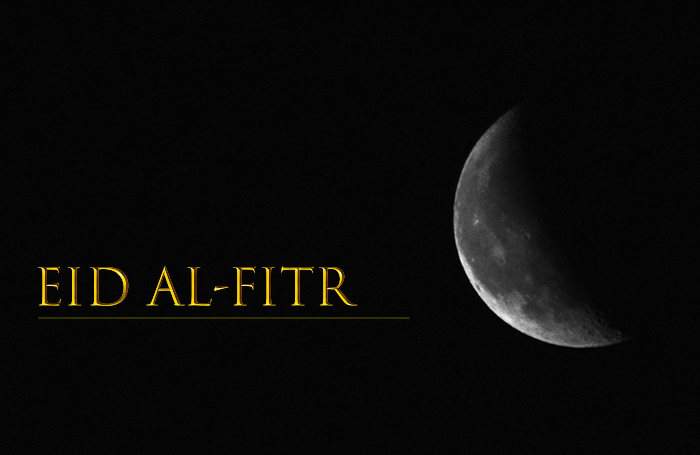
L’osservazione del crescente lunare: un rituale antico
Many Muslim communities in non-Islamic countries [western nations], and many others in the African continent and Asia rely on pronouncements from Saudi Arabia to call an end to Ramadan, other than looking to their own stars and sight the new crescent moon, that mark the end of Ramadan.
It may demand a lot of patience to wait for the sky to darken, allowing to view the position of the planets and stars, which would, in turn, help to identify the moon without any need for telescopes or other magnification methods.
“You don't need any special equipment or charts to see the moon,” said Akhlaaq Abdur-Razzaque, astrophotographer and national coordinator of New Crescent Society, an astronomical organization that aims to “celebrate the relationship between Islam, astronomy, and faith” teaching people how to see the moon with the naked eye, a skill rooted in the Sunnah of Prophet Mohammed ﷺ.
Ibn Umar [may Allah be pleased with him] reported that the Messenger of Allah said in relation to Ramadan: “Do not fast until you see the crescent moon and do not break your fast until you see it, but if the weather is cloudy calculate it ” (Ṣaḥīḥ Muslim)
“You just need a clear view of the sun during setting and the new moon won't be far off,”he added.
When many of the country's mosques announce the end of Ramadan based on the new moon seen in Saudi Arabia, the statement throws the Eid al-Fitr plans of some other Muslim countries into turmoil, not least because the their inhabitants will probably celebrate it on different days.
Not all Muslims try to spot the new moon on their own. For many, especially those living in Europe, confirmation of Eid usually comes through their mosque, in the form of a text message, email, or WhatsApp notification. Such communications usually state that the new moon has been sighted in a Muslim-majority country, such as Saudi Arabia or Egypt.
Il ruolo dell’Arabia Saudita nella determinazione della fine del Ramadan
In most cases, the mosques have relied on the proclamations made by Saudi Arabia. In 2002, Saudi Arabia established the calendar of Umm al-Qura, a lunar calendar which establishes in a predictive and scientific way, in every part of the world, when the month of Ramadan begins. For many Muslims, regardless of their proximity to Saudi Arabia or the Middle East, this "calendar" is the reference point for knowing when to officially announce the end of Ramadan and break the fast.
However, claims about moon sightings have sparked veritable “moon wars“: annual controversies – and occasional heated arguments – over the validity of particular lunar sightings and whether a single country has the right to declare the end of Ramadan for all of the world's 1.9 billion Muslims.
Il Calendario di Umm al-Qura: un punto di riferimento controverso
While a number of international Islamic bodies, including the European Council for the fatwa and research (ECFR) and the Islamic Society of North America (ISNA), subscribe to the calendar of Umm al-Qura , other groups and scholars are much more cautious. Some go so far as to openly question its methodology and accuracy.
In 2021, UK-based Islamic scholars argued that for more than a decade the calendar had sighted the moon “one day earlier than when it is physically possible to see the new crescent moon” and that the predictions about lunar positions often conflicted with the visibility charts of the moon recorded by other astronomers.
Criticisms have long been leveled at the Saudi calendar, including by people living in the Middle East and North Africa. In 2011, Maged Abou Zahra, then president of the Jeddah Astronomical Society, told Egyptian media that Saudi Arabia's prediction of the end of Ramadan was impossible to ascertain by sighting.
This meant that it would be possible that Muslims around the world, following Saudi advice, could end their fast a day earlier than expected. While Saudi authorities have rejected Zahra's claims, the controversy has fueled growing calls for Muslims to start using more scientific methods to conduct lunar sightings in their home countries.
Among those controversial voices was Imad Ahmed, a PhD student at the University of Cambridge, who went on to found the New Crescent Society in 2016.
“The thrills of moon sightings are extremely engaging; we have heard stories of family disputes and even of imams being fired from mosques for disagreeing with other countries' moon sightings,” Imad Ahmed said, adding that relying on other countries to declare the sighting of a new moon, is “a relatively recent phenomenon“.
La guerra lunare’: controversie sull’avvistamento della luna
For him, the origins of new moon sighting controversies in the European Union can be traced to Muslim migration in the 20th century, when “bad weather and overcast skies made it difficult to observe with the naked eye“.
Since its inception, the New Crescent Society has trained dozens of expert observers who attend monthly events sighting throughout the country, as well as in periods of particular interest for the Islamic community, usually held at the Royal Observatory in Greenwich. Ahmed believes the group's popularity can be attributed to the fact that "most people find a sense of wonder, spirituality when they look up at the stars". However, he added, the interest that the New Crescent Society has aroused is also dictated by the need to have objective evidence regarding the outcome of the sightings.
“Relying on secondary information about lunar sightings can have a negative impact on Muslims,” he said. “We have heard of families who have never celebrated Eid together because they always disagree on when the new moon was sighted or they disagree on the accuracy of the source of information“.
According to Ahmed, such disagreements can also undermine trust in mosques. His proposed solution is for UK Muslims to create their own Islamic lunar calendar, based on astronomical sightings made within the country.
It is an idea that has already been taken into consideration in the past. In 1984, Dr Iqbal Sacranie, the founding secretary general of the Muslim Council of Britain, attempted to bring together the leaders of the mosques belonging to the most diverse denominations and orientations to agree on the use of data from the Royal Observatory in order to determine according to Tradition the beginning and the end of Ramadan. While at first it seemed that many agreed, subsequently a large number of mosques have returned to relying on sightings made in distant countries.
Ahmed believes the data collected by the New Crescent Society over the past few years provides a solid foundation upon which UK Muslims can build their own lunar calendar. In fact, he considers the method adopted on the basis of Tradition of fundamental importance for future generations so that "solid Islamic institutions are built in the United Kingdom". Among the further benefits of a UK Muslim lunar calendar is the possibility of Eid being recognized as an official holiday, something most young Muslims in the UK want badly, but on which cannot be acted upon as long as there is internal disagreement about the effective date.
According to Akhlaaq Abdur-Razzaque, the importance of public astronomy does not rest solely on its ability to confirm the accuracy of significant Islamic calendar dates.
“Astronomy inspires a sense of wonder,” he said. “It allows us to appreciate all that Allah has given us.”
Il ruolo delle moschee nella comunicazione della fine del Ramadan
In Italy, on the basis of the scientific cooperation protocol signed on 17 April 2020 between the Centre Culturale Islamico d'Italia (Great Mosque of Rome), the only officially recognized Islamic body in Italy, and the National Institute of Astrophysics (INAF), some recommendations have been adopted, among others: the call for tender for the formation of a Net European Union of Scientists and Imams to address the issue of lunar observation in Europe and to establish the European lunar calendar, and with particular attention to the countries of the northern Mediterranean basin, such as the Ministry of Religious Affairs of Morocco: Italy, France and Spain, and with reference to Germany, Great Britain, with the ICOUK and other neighboring countries.
The Moon sighting attempts for the beginning and end of Ramadan 1444AH/2023 that the Islamic Cultural Center of Italy organized in collaboration with INAF, took place in various locations in Italy, from south to north, with the participation of representatives of the Islamic Confederation Italian, and of the Pakistani and Bengali communities.
Editorial
Editorial