

Virtues Of Salat Duha

Jihād
April 8, 2023
An all-Italian story of integration: Kyare Khaled
May 1, 2023A very simple ibadah, literally two rakʿahs and these two rakʿahs have so much weight and they have so many rewards. Those two rakʿahs are the two rakʿahs of salat al Duha [Salāt as-hru’k, Salāt al-ishra’k, Salāt al-Awwābeen]

The secrets of Salāt Duha.
a) The prophet Muhammad ﷺ told us that every single morning, every single joint of our body will owe Sadaqat on that joint. In another hadith the prophet ﷺ told us that we have 360 joints in our body, and every morning we have to give Sadaqat on behalf of every joint. Then he continued and said that if you say subhan allah, that’s one Sadaqat, if you say alhamd lilah, that’s another, la 'iilah 'iilaa allah, allah akbar or doing good and forbidding evil, all these are forms of Sadaqat. Then at the end of the hadith he said all that could be accomplished by praying two rakʿahs of Duha. So, two rakʿahs of Duha will suffice for giving charity on behalf of every single joint in the body. And we all know the importance of having these joints
b) The prophet ﷺ called this Salāt, Salāt al-Awwābeen. Al-Awwābeen is a plural of Awwāb. Awwāb is a person that is constantly repenting. So, the prophet ﷺ said; none is diligently establishing Salāt Duha except the one who is awwāb. Awwāb is a person that comes constantly to Allah ﷻ and asking for forgiveness.
c) Abu Huraira [may Allah be pleased with him], a very close friend of the Messenger of God ﷺ, said: my best friend [the Prophet ﷺ] gave me an advice [which advice is to the rest of the Ummah], - to do three things that I will never abandon as long as I live: - to fast three days of every month, to pray two rakʿahs of Duha every day, and not to sleep before I pray [Salāt] witr.
d) If I pray this Salāt at a certain time it will be equal to the reward of haju and umur: When, we come to the Masjid to pray the congregational prayer [Salāt aljamea] and we stay in the same masjid remembering Allah, we wait for the sun to rise and after 15 minutes we pray those two rakʿahs, then this whole process will give me the reward of haju and Umur, complete, complete, complete, like the Messenger of Allah ﷺ said. And for the sister, even if she prays it at home, she will get the same reward if she follows these steps.
e) The Messenger of Allah ﷺ said [that Allah ﷻ said (hadith Quds)]: “O son of Adam, pray in the beginning of the day four rakʿah and I will suffice you [the whole day] at the end of it”: protection from all evil, protection from all harm, protection from misguidance, relief from anxiety.
These protections apply to brothers and sisters, young and the old and every body
What is the time that Salāt Duha starts?
Salāt Duha starts 15 minutes after sunrise and it lasts all the way till 15 minutes before Dhuhr. So, it’s a huge window. And the best time to pray it is when the sun is in the highest position, in the middle between those two times. Approximately in our time around, nine thirty and ten o’clock. Those two rakʿah are called Salāt Duha and when they are prayed in the beginning, they are called Salāt al-ishra’k [صلاة الشروق]. So, there is no difference between Salāt Duha and Salāt al-ishra’k (صلاة الإشراق). Duha is the main Salāt, and if it is prayed during the beginning of the time it is called Salāt al-ishra’k or Salāt as-hru’k.
Conclusion - Salāt Duha;
1. Fulfills charity on every joint in your body..
The Prophet ﷺ said:
“Upon every one of your joints in the morning is charity due.
Every glorification of Allah is charity. Every praise of Allah is charity. Every declaration of the oneness of Allah is charity. Every exaltation of Allah is charity. Enjoining good and forbidding evil is charity. It is enough of that to perform two cycles of prayer in the forenoon”, [Salāt duha] [Ṣaḥīḥ Muslim]
This hadith emphasizes the status and virtue of Duha prayer, two rakʿahs of which is sufficient as a charity on behalf of every joint in the body, & a sign of genuine gratitude to Allah ﷻ.
2. It is the prayer of the oft-repentant.
The Prophet ﷺ said:
“None is diligent in establishing Duha prayer except one who is oft-repentant [awwāb], and it [Duha] is the prayer of the oft-repentant.”
3. It was an advice from the Messenger himself.
Abu Hurayrah [may God be pleased with him] reported that the Messenger of Allah ﷺ said: “Whoever regularly prays the two rakʿah di Duha, his sins are forgiven even if they are like [the vastness of] the foam of the sea.” [Tirmidhi]
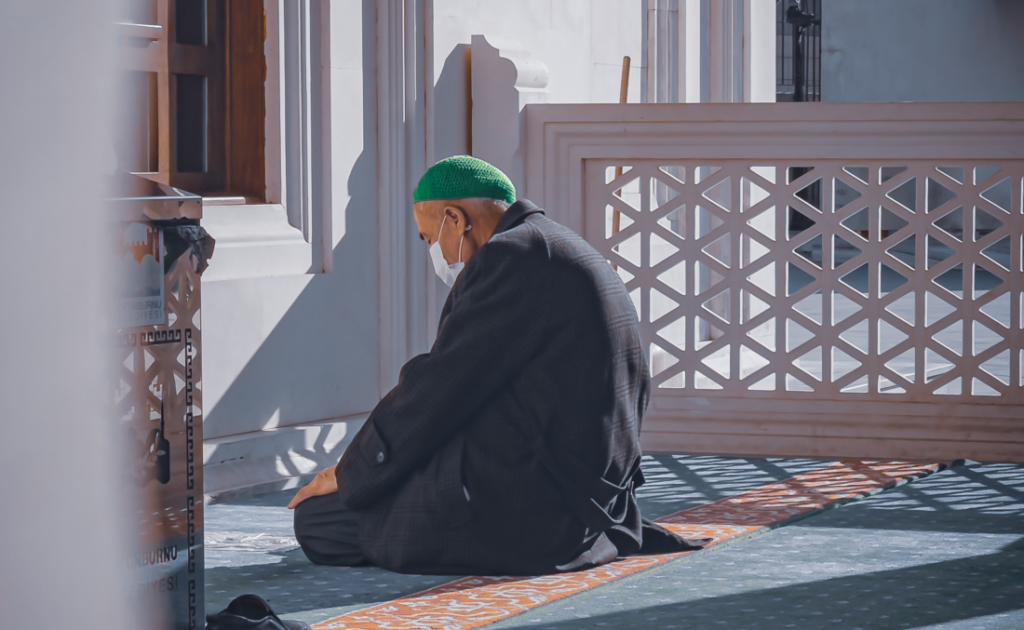
Duha prayer, also referred to as Salāt al-Awwābeen [the prayer of the oft-repentant], is prayed like most other voluntary prayers in that you pray two units and you end the prayer with the tasleem. There is no maximum number, if you wish to pray more than two units, then you may pray as many as you wish, two units at a time. The prophet ﷺ said: “The (Sunnah) prayers of the night and day are two (rakʿah) by two.”
It's Recommended Time:
The time of Duha begins after the sun fully rises and it ends approximately 15 minutes before Dhuhr prayer. The most preferred time for Duha prayer is at the hottest part of the day, when the sun has reached its zenit [its highest point], and this is approximately halfway between sunrise and Dhuhr prayer.
Salāt Duha is a very strongly encouraged Sunnah. It is small in its timeframe, and yet its reward is massive. One of the things about Salāt duha by the way, unlike Qiyaam, is that our prophet Muhammad ﷺ would make long Qiyaam, long Tahajjud. But what we gather from the Sunnah, Salāt duha was not long. It was in fact short Suras. So, the whole Salāt Duha would not take more than a few munutes.
And the reason why our scholars say that despite the fact that it is shorter, its rewards are so great, is that duha timeframe is typically the timeframe when we are busy with the dunya. That’s when we go to work, when we enter the fields, when we are doing business. So, if we can break away from our dunya routine even for ten minutes, five minutes, that blessing is equivalent to a much longer timeframe outside of Salāt Duha.
Moreover, our prophet Muhammad ﷺ encouraged us to pray duha in many ahaadiith.
Of them he said: [ صلاة الأوابين حين ترمض الفصال] He called it Salāt al-Awwābeen. The term awwāb is an adjective that Allah ﷻ uses in the Qoran to describe the Prophet - Dāwūd [peace be upon him], and to describe a number of the prophets. Allah ﷻ says of the prophets they were awwāb.
Awwāb [ أواب] means turning back to Allah. Hence Duha as we are all aware, can be prayed any time from when the sun rises basically at half an hour forty-five minutes after Fajri finishes, until before the Zawaal. And that’s before Dhuhri time. So that’s like in the first five hours on an average day. May be in the summer, in the first six or seven hours. The ideal time, [the best time] is right before Zawal by half an hour, [a little bit before Zawal]. That’s going to be, suppose Dhuhri is at 1:30, duha is going to be at around 12:00 or 12:30
Editorial