

The decentralized succession of the Muslim Brotherhood Movement

The month of Ramadan
March 21, 2023
Il Ramadan illumina Londra est
March 24, 2023
Il gruppo di “Ascoltare e obbedire”
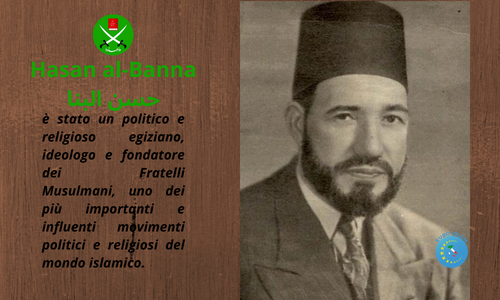
The Muslim Brotherhood Movement was founded in Egypt in 1928 by Hassan Al-Banna who, after the fall of the Ottoman Caliphate, aspired to bring Islam back to its original tradition. His motto "Listen and obey" are the words that make all members of the group proud. The most senior of the Movement is the General Guide that constitutes the point of reference for all the members of the group located throughout the world. The execution of his orders and commands is entrusted to the subordinate leaders as in a pyramidal and centralized structure.
The new structure of the Movement
Between 2022 and 2023, the Muslim Brotherhood lost the main leaders of the Movement for various reasons: both with the arrest and exile of prominent figures by the government in Egypt, and with the death of some of them. Today this Islamist organization has changed its organizational and management structure.
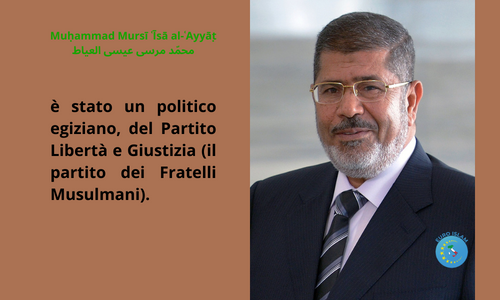
The Muslim Brotherhood Movement has never had such a difficult time in its history. The first shock was in 2013 when President Mohamed Morsi was removed from Egypt and the leaders of the Brotherhood were forced to leave the country. The hierarchy of the Movement was dismantled when the Supreme Leader was arrested and later sentenced to life imprisonment.
Subsequently, the Movement tried over the years to oppose President Abdel Fattah al-Sisi, but all was in vain. Thanks to the program implemented by President al-Sisi, the Islamist group inside the country was defeated. This process has also guaranteed to counter jihadist terrorism. Al-Sisi dismantled the Muslim Brotherhood in Egypt and weakened them, they were forced to flee but now they still cannot find an internal balance.
The death in November 2022 of the interim general leader of the Muslim Brotherhood, Ibrahim Munir, generated an internal conflict in the militant group.
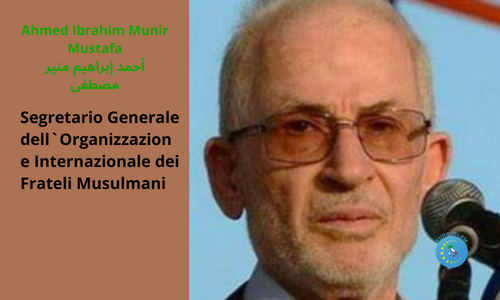
At the moment the Movement would be divided into three factions operating outside Egypt: one located in Great Britain and the other two in Istanbul, Turkey. Munir's faction is currently led by Mohei El-din El-Zayet. One of the factions in Istanbul is led by Mahmoud Hussein and the other, also in Istanbul is represented by the organization "Current of Change".
Each of the three factions claims to be the legitimate representative of the Muslim Brotherhood group and the legitimate heir for the pursuit of the goals of the Movement. A fragmentation of the original Group was generated, giving rise to a decentralized and independent command system between the parties.
The factions pursue different objectives: the London group, as already approved by its former leader of the Muslim Brotherhood, no longer has any ambitions for power in Egypt; factions in Turkey, and in particular Current of Change, pursue insurrectionary activity with military operations against the Egyptian government and army.
The structure of the Movement is divided between a western front headed by El-Zayed, the interim guide, and an eastern front, led by Mahmoud Hussein.
The internal decomposition and fragmentation of the Movement could only be recomposed through the election of a new leadership by the general assembly, but this is difficult as the chief members are arrested and in exile.
Movement split
2022 was a year of transition for the Muslim Brotherhood internationally due to the death of its radical ideologue Yusuf al-Qaradawi, who was its spiritual leader for half a century. His successor Ali al-Qaradaghi is the secretary general of the International Union of Muslim Scholars, based in Qatar. Al-Qaradaghi was chosen for this prestigious post for defending Qaradawi against charges of supporting terrorism even though both have been supporters of the Muslim Brotherhood and Hamas.

The growing leadership crisis in recent years has shown many organizational inefficiencies with misappropriation and abuse of power within the group. Quite different was the early model of the Muslim Brotherhood Movement, which prided itself on being the most organized Islamist force in the region and the parent group of all Islamist movements around the globe.
Editorial